



Food guide
What Is Kimchi?
Korea's fermented vegetable side dish, explained simply.
Kimchi is the Korean food most people have already heard of before they ever land in Korea.
Food guide
Korea's fermented vegetable side dish, explained simply.
Kimchi is the Korean food most people have already heard of before they ever land in Korea.
Quick facts
But hearing the name and actually understanding it are two different things.
Kimchi is not one dish. It is a whole category of salted, seasoned, and often fermented vegetable side dishes. The vegetable, the seasoning, the saltiness, and the amount of time it ferments can all change, and each version has its own name.
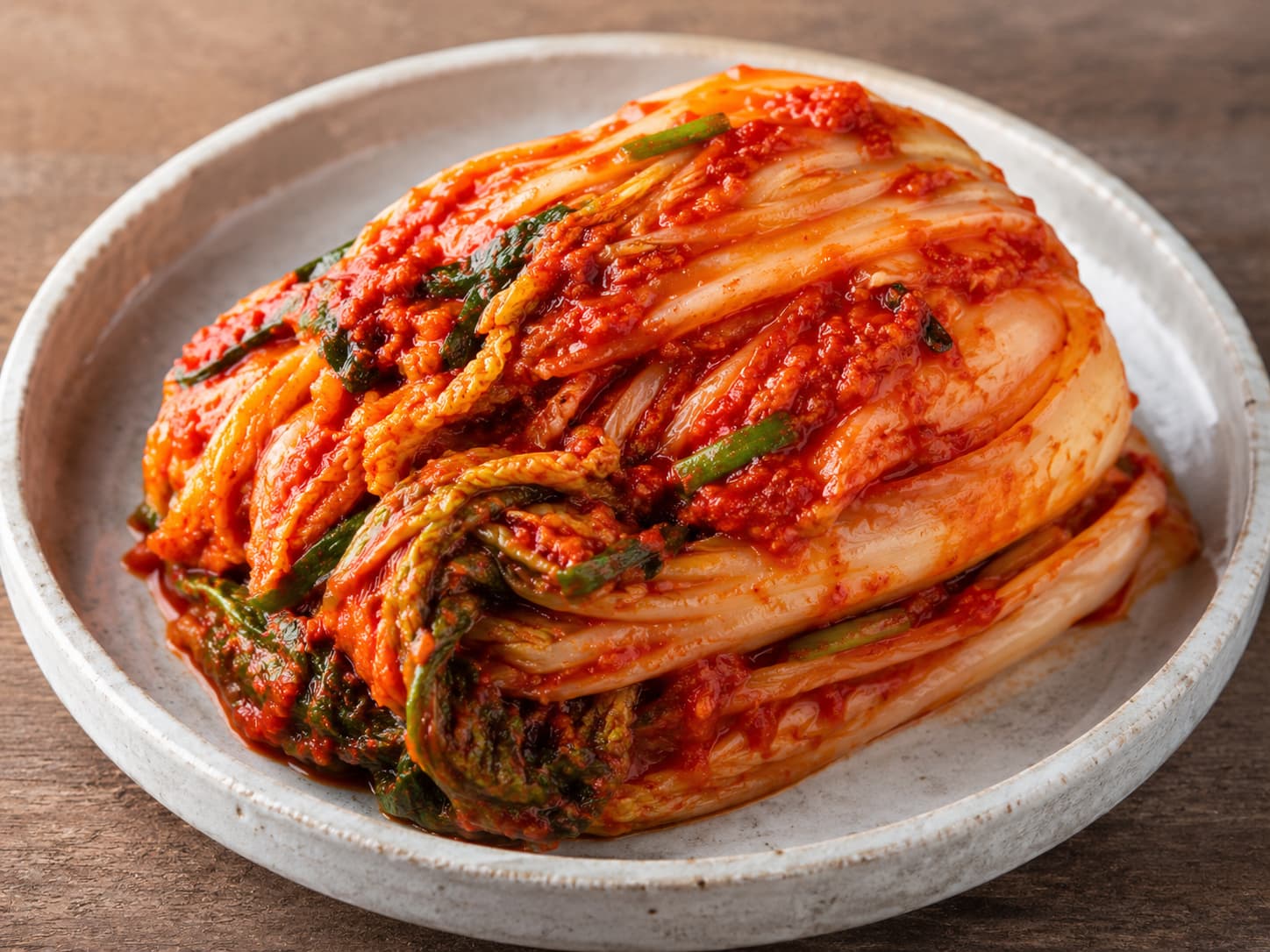
The version most people picture is baechu-kimchi, made with whole napa cabbage. The cabbage is salted, rinsed, and coated with a seasoning paste that usually includes red chili flakes, garlic, ginger, and salted seafood or fish sauce for depth. Then it is packed away to ferment.
That fermenting part matters.
Freshly made kimchi tastes different from kimchi that has sat for a few weeks, and both are considered normal, good kimchi. Younger kimchi is crisper and milder. Older kimchi turns sourer and softer, which is exactly what you want for kimchi-jjigae, the kimchi stew that shows up on so many Korean tables.
Baechu-kimchi is only the beginning.
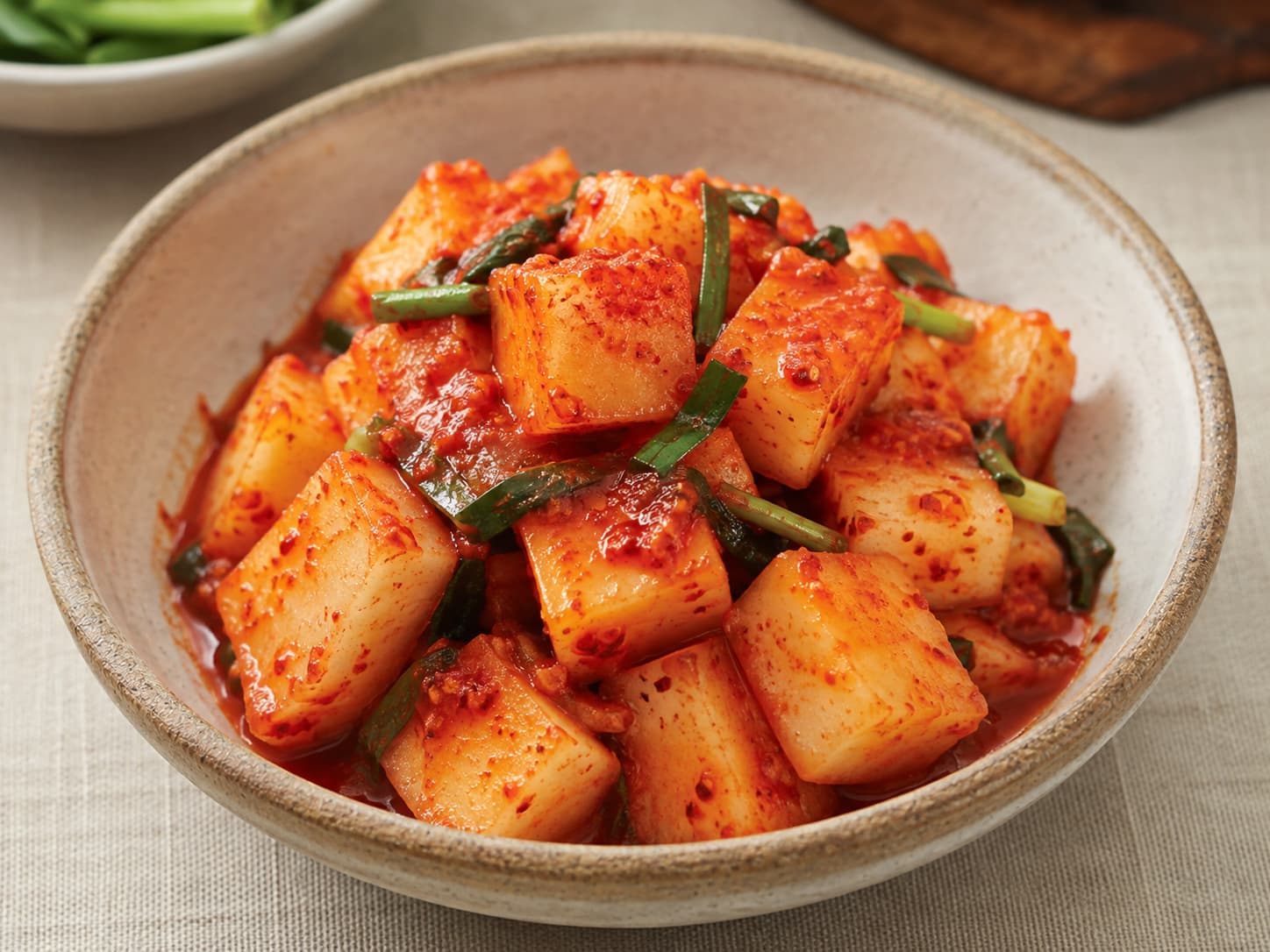
Kkakdugi is made from radish instead of cabbage, cut into small cubes and seasoned the same general way. It has a heartier crunch than baechu-kimchi, and it is the kimchi most often served next to a bowl of gomtang or seolleongtang, the milky bone-broth soups that ask for something sharp on the side.
Oi-sobagi takes a different vegetable again. Cucumbers are sliced partway through, stuffed with a seasoned filling, and usually eaten fresh rather than left to ferment for a long time. It is lighter and cooler than baechu-kimchi or kkakdugi, which makes it a common choice in warmer months.
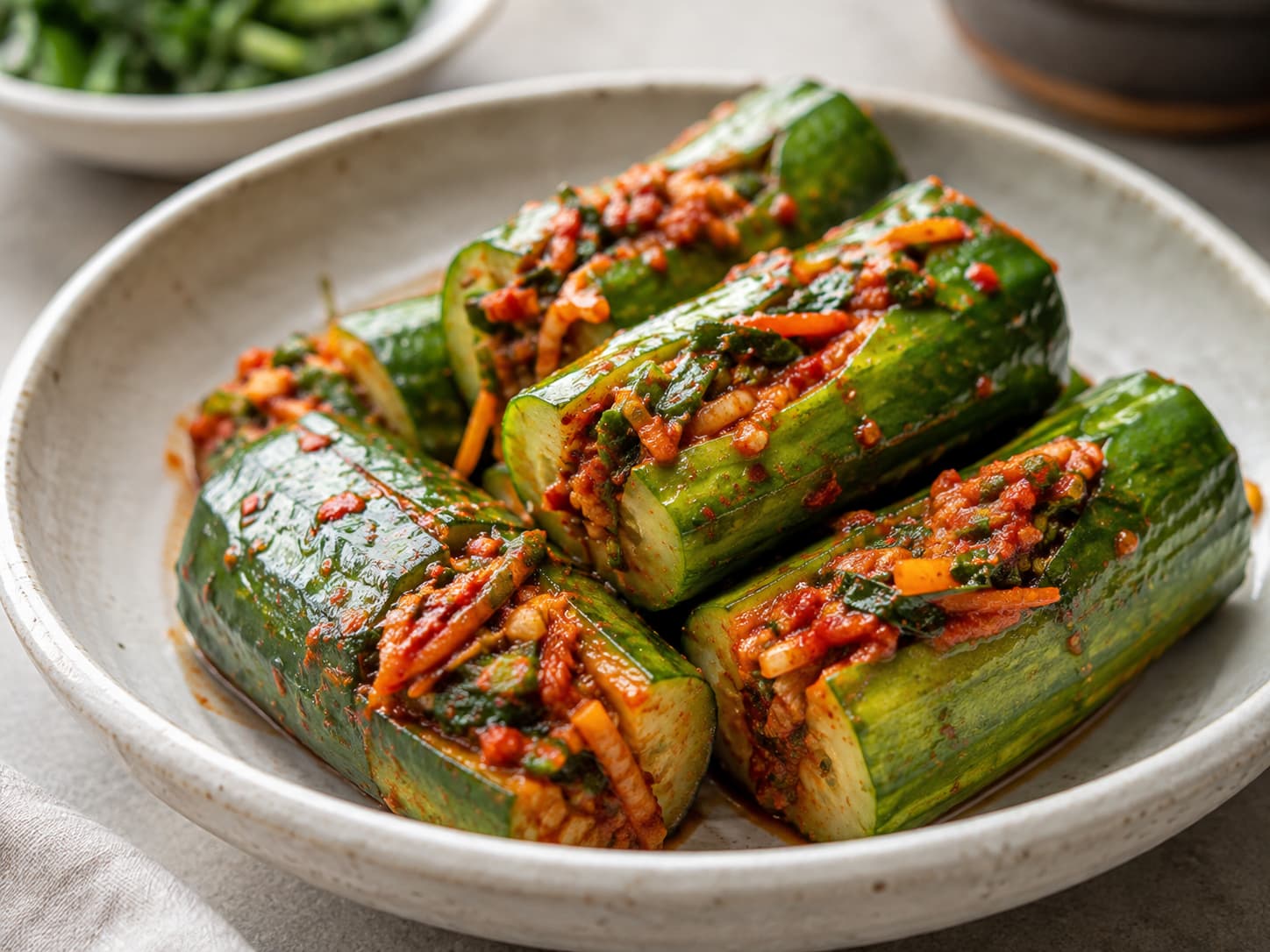
Once you know these three, you start noticing how much kimchi actually varies. Some families keep it simple. Some add fruit, like pear or apple, into the seasoning paste for sweetness. Some make it far spicier than others. There is even a joke in Korea that almost anything can be turned into kimchi if you salt it and season it the right way.
Taste also shifts by region and, honestly, by household. What your friend's grandmother makes and what a restaurant serves you can taste noticeably different, and neither one is the "wrong" kimchi.
Kimchi is also not just a food. It is a shared activity.
Kimjang, the tradition of making large batches of kimchi together, usually in late autumn before winter, is a communal event. Families and neighbors gather, prepare enough kimchi to last for months, and share the finished batches with each other. In 2013, kimjang was added to UNESCO's Intangible Cultural Heritage list, recognizing it as a tradition of cooperation, not only a recipe.
As a visitor, you will not need to search for kimchi. It finds you.
At many Korean restaurants, kimchi often arrives as banchan, one of the small side dishes set on the table without you ordering it. Refills are often free or self-service depending on the restaurant, so it is worth checking rather than assuming.
You will also meet kimchi cooked into other dishes: kimchi- jjigae, the stew built around well-fermented kimchi, pork, and tofu, and kimchi-bokkeumbap, kimchi fried rice, often finished with a fried egg on top. Both are good, low-risk ways to try kimchi if the idea of eating it plain still feels new to you.
Kimchi is spicy for some people and completely normal for others, and the heat mostly comes from the chili paste itself rather than from how long it has fermented. What fermentation changes is the sourness, aroma, and texture — older kimchi turns tangier and softer, not necessarily spicier.
What stays the same across every version is the idea behind it: vegetables, salt, seasoning, and time, turned into something a Korean table does not really feel complete without.
Keep exploring
Food guide
A local-friendly guide to Korean soups and stews, including kimchi-jjigae, from bubbling pots at the table to how they usually get shared and ordered.
Read guide →
Food guide
A relaxed starting point for first-time visitors, covering the dishes and small habits that make Korean meals feel less like homework.
Read guide →
Food guide
A practical, friendly guide to ordering at Korean restaurants, from side dishes that appear without asking to calling a server over.
Read guide →
Food
Simple HAEMIL food guides for understanding what to eat in Korea and how to order without turning every meal into homework.
Read guide →