

Food guide
What Is Bungeoppang? Korea's Fish-Shaped Winter Snack
Bungeoppang is one of those Korean foods that looks confusing for about two seconds.
Food guide
Bungeoppang is one of those Korean foods that looks confusing for about two seconds.
Quick facts
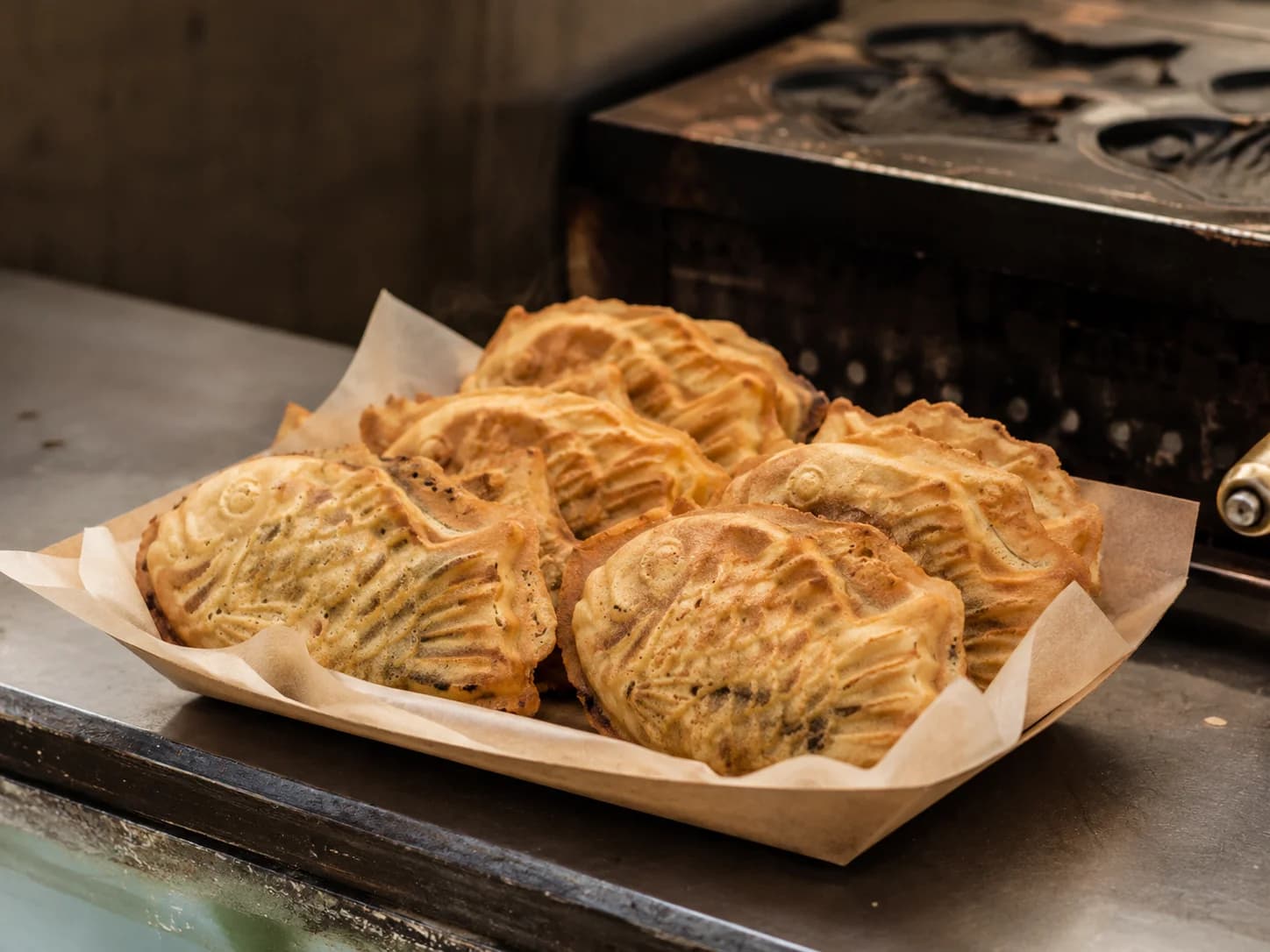
It is shaped like a fish, but it does not taste like fish and does not contain fish. Bungeoppang, or 붕어빵, is a warm fish-shaped snack usually filled with sweet red bean paste. The name roughly means "carp bread," because the mold looks like a small fish — but for many Koreans, the important part is the season.
Bungeoppang feels like winter. You usually start noticing it when the air gets cold — a small stall near a subway station, market street, school area, or neighborhood corner, with a metal mold, warm batter, sweet filling, and that smell that makes people check their pockets for coins or a card. A good bungeoppang is lightly crisp outside, soft inside, warm enough to hold carefully, and sweet without feeling like a big dessert. The classic filling is red bean paste (pat); if you are new to Korean sweets, it may feel unusual at first, but it is one of the most familiar sweet flavors here — gentle, earthy, and not too loud.
These days you may also find custard or cream-filled bungeoppang, plus sweet potato, chocolate, cheese, or seasonal fillings depending on the vendor and neighborhood. The red bean one is the old classic; custard is the easy modern favorite for many first-time visitors. Part of the fun is choosing between them — Koreans sometimes joke about red bean vs custard, head first vs tail first, crisp vs soft. Not serious questions, but they show how familiar the snack feels.
For travelers, bungeoppang gives you a very local winter moment. Find a stall, choose a filling, and eat it while it is still warm — the outside still has a little crispness and the filling is hot. If you carry it around too long, it becomes softer; still good, but not the same.
Bungeoppang can be seasonal. In Korea it is much easier to find in winter than in the middle of summer. Some shops sell it year-round, and some cafés or snack brands make their own versions, but the classic street-stall feeling belongs to cold weather. Visit in December, January, or February and the charm clicks faster — cold hands really do make bungeoppang taste better in feeling, not just as a joke.
When the weather is cold, a warm fish-shaped snack becomes more than a snack — a small comfort. People buy a few pieces to share; office workers grab one on the way home; students eat them after class. It reminds people of winter streets, school days, neighborhood stalls, and ordinary evenings — closer to a small seasonal memory you can eat than a luxury dessert.
You may hear comparisons to Japanese taiyaki. The two snacks are related in shape and idea, but in Korea bungeoppang has its own everyday feeling, tied to winter street stalls and the comfort of finding one when the weather turns cold. It is not about the fish shape — it is about the cold day, standing near a warm stall for a minute, choosing red bean or custard, and eating something simple before you keep walking. If you see it in Korea, try one, especially in winter.
Keep exploring
Food guide
A local-friendly guide to Korea’s sweet egg sandwich, from old street stalls to modern toast chains.
Read guide →
Food guide
A local-friendly first guide to Korean convenience store food, quick meals, snacks, drinks, and 24-hour culture.
Read guide →
Food guide
A warm beginner-friendly guide to what to order first, how to eat with banchan and ssam, and why Korean barbecue feels social.
Read guide →
Food
Simple HAEMIL food guides for understanding what to eat in Korea and how to order without turning every meal into homework.
Read guide →