← Back to Travel

Travel guide

Korea Etiquette Tips for Tourists: What to Know Before Your First Trip

Korea is not a difficult country to visit. But a few small etiquette habits can make your first trip feel much smoother. You do not need to know every rule — most people understand that visitors are learning. Think of this as a local friend's quiet guide, not a strict rulebook.

Quick answer

  • Subway: keep bags close, avoid loud calls, and be careful during rush hour.
  • Restaurants: systems vary; kiosks, table bells, self-service water, and counter payment are common.
  • Tipping: not normally expected in everyday restaurants.
  • Trash: public trash cans can be less common than visitors expect.
  • Shoes: some places may ask you to remove shoes.
  • Noise: public spaces can be busy, but loud phone calls may feel uncomfortable.
  • Photos: be careful in residential areas, temples, palaces, and around strangers.
  • Local tip: watch what people around you do, then follow gently.

The goal is not to act perfectly Korean.

The goal is to avoid small moments that feel awkward or uncomfortable.

Subway manners

On the subway, keep your bag close to your body.

Seoul subway trains can become crowded, especially during weekday rush hour. If you have a backpack, it is better to hold it in front of you or keep it low instead of letting it bump into people behind you.

Try not to block the doors.

People often move quickly when getting on and off.

If you are not sure where to stand, step to the side and let people pass first.

Phone calls on the subway are usually kept short and quiet.

You may see people watching videos or using phones, but loud calls or speaker sound can feel uncomfortable in a crowded train.

Use earphones if you watch something.

Keep your voice lower than you might in an outdoor tourist area.

Rush hour needs extra patience.

During morning and evening commute times, subway cars, platforms, and station transfers can be very crowded. People are trying to get to work, school, appointments, or home.

If you are sightseeing, it is often better to wait a little instead of forcing yourself into the busiest movement time.

A cafe break can sometimes make the whole day easier.

Taxis and transport

Taxis are useful, but they are not always the polite or practical answer.

If traffic is heavy, a taxi can become slow and stressful. During rush hour or rain, roads can move badly and drivers may be under pressure.

Use taxis when they reduce stress, such as late at night, with luggage, bad weather, or a difficult route.

For most city movement, the subway is usually more predictable.

Restaurant habits

Restaurants in Korea can work in different ways.

Some restaurants have staff who take your order.

Some use kiosks.

Some use tablets at the table.

Some ask you to pay first.

Some let you eat first and pay at the counter after the meal.

This can feel confusing at first, but it is normal.

Look around before you panic.

If there is a kiosk, check for a language button.

If there is a table bell, you can press it when you need staff.

If water is not brought to you, check for a self-service area.

In many casual restaurants, water is self-service.

Spoons, chopsticks, napkins, or scissors may be in a drawer under the table or near a self-service corner.

This surprises many first-time visitors.

It is okay to look around and copy what other customers are doing.

Side dishes are part of many Korean meals.

They are called banchan.

Some restaurants refill side dishes.

Some have a self-service banchan area.

Some may not refill every item.

Take a little first and avoid wasting food.

If there is a clear self-service section, it is usually okay to take a reasonable amount.

Table bells are common and not rude.

If there is a button on the table, press it when you are ready to order or need help. Staff may not check on your table repeatedly like in some countries.

That does not mean they are ignoring you.

It is just a different system.

Tipping is not normally expected in everyday Korean restaurants and cafes.

You usually pay the amount shown.

In many restaurants, payment happens at the counter after eating. In cafes, kiosks, food courts, or casual places, you may pay before eating.

If you are unsure, watch what other customers do.

Trash, shoes, and photos

Public trash cans can be harder to find than visitors expect.

Do not assume there will be a trash can on every street corner.

It is useful to keep a small empty bag for wrappers, receipts, or tissues until you find a proper place to throw them away.

Convenience stores may have bins, but not every store wants outside trash.

Be considerate.

Shoes can matter in some places.

Most modern cafes, shops, hotels, and restaurants do not require you to remove shoes.

But some traditional restaurants, guesthouses, temple spaces, hanok stays, or private indoor areas may ask you to take them off.

If you see a shoe shelf or other people removing shoes, follow them.

It is a simple habit, but it shows respect for the space.

Be careful with photos.

Korea is very photo-friendly in many travel areas, but not every place is a photo set.

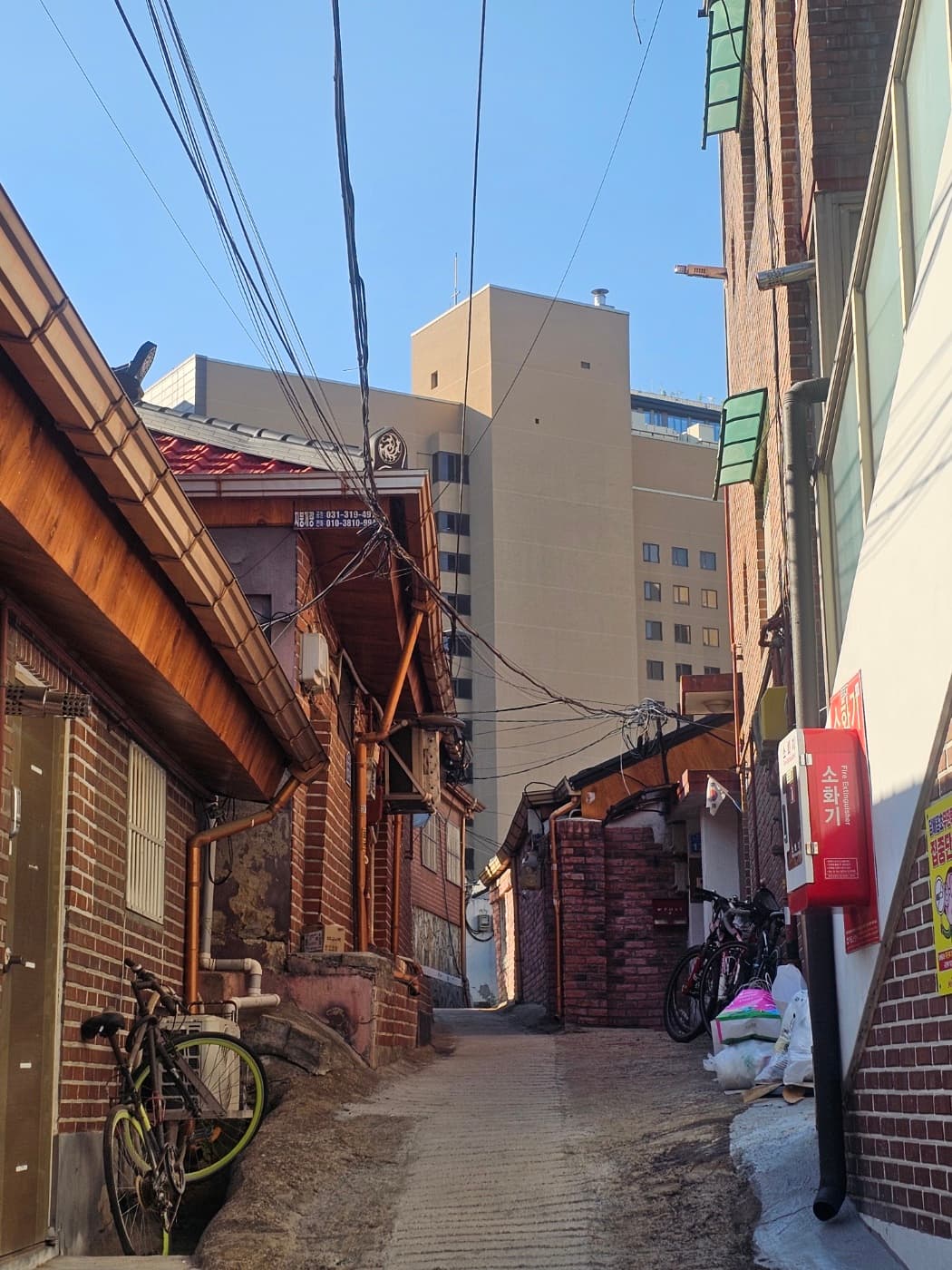
In residential neighborhoods like parts of Bukchon, keep your voice low and be respectful. People actually live there.

In temples, palaces, museums, small shops, and restaurants, avoid taking close photos of strangers without permission.

If a place feels quiet or private, slow down and look for signs.

This is especially important in hanok streets, cafes, and small local alleys.

Queues and public noise

Queues matter.

If people are lining up, join the line.

This applies to cafes, restaurants, buses, subway platforms, pop-up shops, food stalls, and photo spots.

In very crowded places, the line may not always look perfect, but try to follow the flow.

Do not push forward just because you are unsure.

Ask gently or wait and watch.

Public noise is about context.

Korea is not silent.

Markets, nightlife areas, festivals, shopping streets, and restaurants can be lively.

But in subways, buses, quiet cafes, museums, temples, residential streets, and elevators, loud talking can stand out.

The local habit is often to adjust your volume to the space.

Loud is fine in the right place.

Quiet is better in shared transport or calm areas.

Cafes, cultural sites, and busy streets

At cafes, remember that some places are about atmosphere.

Korea has many beautiful cafes, and people often stay, talk, take photos, work, or rest. But in popular cafes, seats can be limited and lines can form.

Avoid using a table for too long if the cafe is small and crowded.

If you take photos, be careful not to block people or turn the whole space into a personal shoot.

Enjoy the cafe, but notice the room.

At palaces and cultural sites, move gently.

You do not need to be overly formal.

Just avoid loud behavior, climbing where you should not, blocking paths for photos, or treating quiet cultural spaces like theme park sets.

If you rent hanbok, enjoy it respectfully.

Take photos, but still respect other visitors, staff, and the space.

In markets and busy shopping streets, be aware of movement.

Do not stop suddenly in the middle of a narrow path to check your phone.

Step to the side first.

This sounds small, but it helps a lot in crowded places like Myeongdong, Hongdae, Namdaemun, Gwangjang Market, or popular cafe streets.

Watch first

Korea can feel fast-paced.

Staff may move quickly.

Restaurants may turn tables quickly.

Subway crowds may move with purpose.

Delivery riders may pass through busy streets.

This does not mean people are angry.

It often just means the rhythm is fast.

If you feel overwhelmed, step aside, check your map, and move again when you are ready.

One of the best etiquette tips is to watch first.

Before ordering, watch how people order.

Before throwing something away, check where others put trash.

Before entering a room, check shoes.

Before taking photos, check the mood.

Before pressing a bell, see if other tables use it.

You can learn a lot in ten seconds.

Final note

For HAEMIL readers, Korea etiquette is not about memorizing a long list.

It is about small awareness.

Keep your bag close on the subway.

Use a quiet voice in shared spaces.

Follow restaurant systems calmly.

Do not waste side dishes.

Watch for shoe rules.

Be careful with photos.

Respect lines.

Give yourself extra patience during rush hour.

And when you are unsure, pause and look around.

That is enough for most situations.

You do not have to be perfect.

You just have to be considerate.

That makes travel easier for you and for the people around you.

Keep exploring

Related travel guides

See all Travel →

Travel guide

Things to know before visiting Korea for the first time

A practical first-time Korea travel guide with local tips on Seoul transport, maps, rush hour, food ordering, costs, cafes, weather, and common travel mistakes.

Read guide →

Travel guide

How to get around Seoul for first-time visitors

A practical Seoul transport guide for first-time visitors, with subway, taxi, rush hour, airport routes, walking, maps, and local trade-offs.

Read guide →

Travel guide

How to use the Korean subway

A local-friendly first guide to Korean subway rides, T-money cards, transfers, station signs, apps, etiquette, and simple mistakes to avoid.

Read guide →

Food guide

How to order food in Korea

A practical guide for first-time visitors, with Korean restaurant ordering tips, kiosks, table bells, side dishes, self-service water, paying, solo dining, and spicy food notes.

Read guide →

Food guide

What to eat in Korea for the first time

A friendly food guide for first-time Korea visitors, with Korean BBQ, gimbap, tteokbokki, soups, fried chicken, convenience stores, cafes, and realistic local tips.

Read guide →

Travel guide

Seoul neighborhood guide for first-time visitors

A practical guide to Seoul neighborhoods, from Myeongdong and Hongdae to Gangnam, Insadong, Euljiro, Seongsu, Jamsil, and Itaewon.

Read guide →

Travel guide

Where to stay in Seoul for the first time

A practical local-style guide to choosing your Seoul base, from Myeongdong and Hongdae to Gangnam, Insadong, Seoul Station, and Jamsil.

Read guide →