Where to start, what works when you are tired or alone, and what to do if spice is a problem — the short answer is not to eat every famous Korean dish in one trip. Choose meals that match your energy, group size, weather, and neighborhood. A good first food plan mixes one proper meal, one casual snack meal, one comfort-food bowl, one convenience store moment, and one cafe or dessert stop — enough to feel full without turning every meal into homework.
Korean BBQ
Korean BBQ is a classic first proper meal — social, warm, and very Korean for many visitors. You grill meat at the table, wrap bites with lettuce, sauces, garlic, and side dishes, and the meal is as much about the table rhythm as the food itself. It can cost more than simple local meals, especially in famous tourist areas, and some places work better for groups than solo travelers or expect a minimum meat order. Choose BBQ when you have time, energy, and someone to eat with — not necessarily your first meal right after landing. After the grill, some tables order cold naengmyeon to finish — see the naengmyeon guide for mul, bibim, and what to expect.
Gimbap
For an easier casual meal, try gimbap — rice and fillings rolled in seaweed and sliced into small pieces. It is simple, portable, familiar enough to understand, and still very Korean in daily life. Gimbap works well for lunch, a travel day, or eating alone before sightseeing.
Tteokbokki
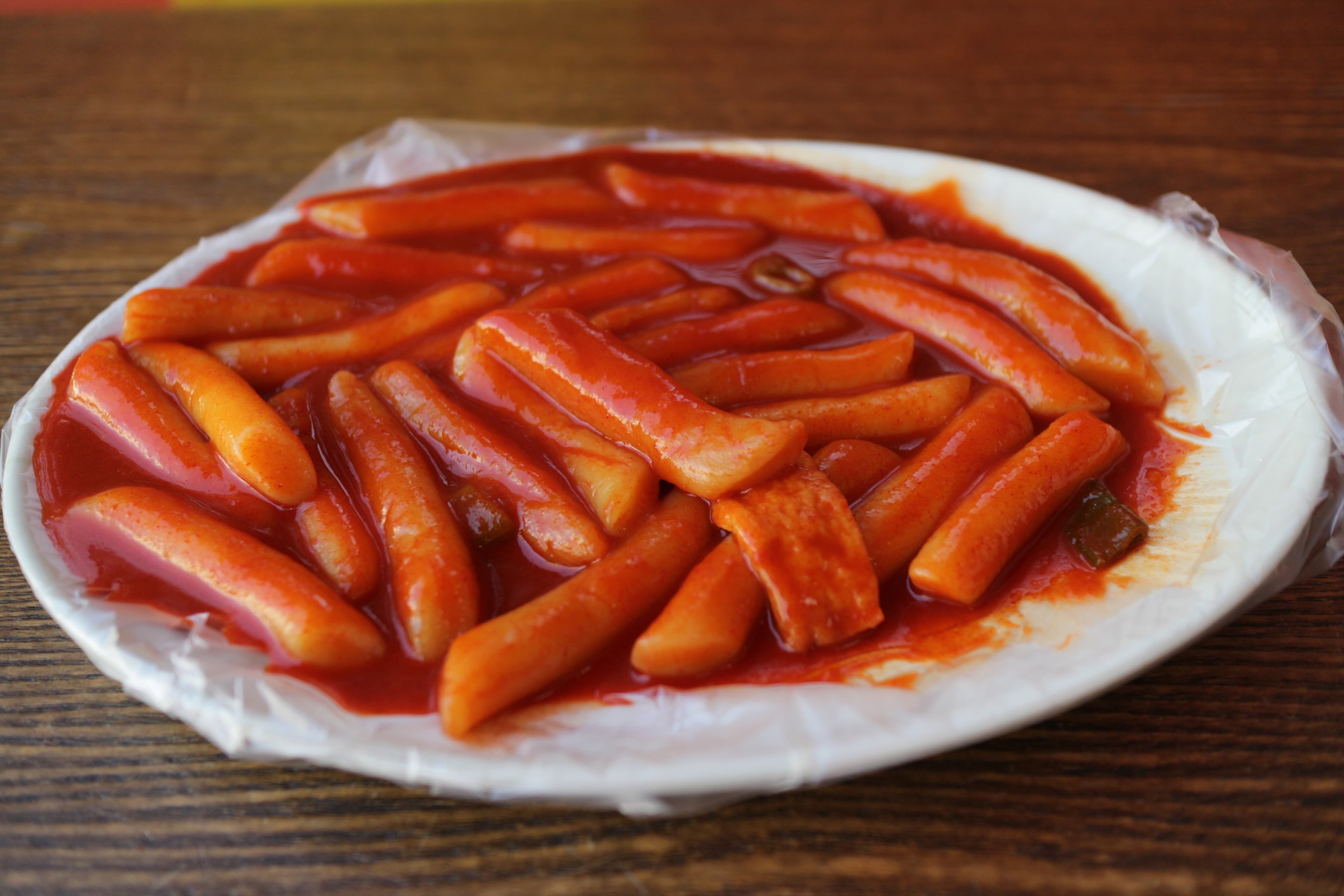
For a street-food feeling, try tteokbokki — chewy rice cakes in a spicy-sweet red sauce you can find in bunsik shops, markets, food courts, and casual snack spots. Spice varies a lot; if you are sensitive, share it with gimbap, fried snacks, or fish cake soup. Tteokbokki is fun as part of a casual snack-style meal rather than a full dinner on its own.
Bunsik
That casual snack-shop style is called bunsik — tteokbokki, gimbap, twigim, fish cake, ramen, sundae, and other simple foods on one table. Not fancy, but one of the easiest ways to understand everyday Korean eating.
Soup and stew
For a comforting meal, try soup or stew — gukbap, seolleongtang, kalguksu, soft tofu stew, kimchi stew, soybean paste stew, and similar one-bowl meals built around rice and broth. You sit down, eat at your own pace, and add side dishes as they come. Not all are spicy; clear broths, beef bone soup, and noodle soups are gentler options. Soup meals shine in cold weather or after a long walking day.
Korean fried chicken
Korean fried chicken is popular, familiar, and good for sharing — texture, sauces, and side dishes can feel different from fried chicken at home, and it works well at night when you want a comfortable dinner without a complicated restaurant experience. Portions can be large, famous places may have long waits, and it can feel heavy if you eat it too often — treat it as a fun meal, not your only Korean food experience.
Convenience store food
Convenience store food is part of the real trip — useful for breakfast, late-night snacks, triangle gimbap, cup ramyeon, lunch boxes, and small bites when you are tired, jet-lagged, or between plans. It is not always the best food in Korea, but it saves a day and lets you try small things without committing to a full restaurant meal.
Cafes and dessert
Leave space for cafes and dessert — Korea has a strong cafe culture, from simple coffee stops to dessert-focused spaces and atmosphere-heavy streets. Bingsu, cakes, pastries, and seasonal sweets are common; famous areas like Myeongdong, Hongdae, Gangnam, and Insadong can run pricier when you are paying for location as much as the drink. That trade-off can still be worth it — just expect cafe stops in tourist streets to cost more than a quick chain coffee.
Planning tips
Avoid planning every famous restaurant — popular places can have lines, limited seating, break times, or ordering systems that feel confusing, and a schedule built on too many viral spots gets stressful fast. Plan a few key meals and leave the rest flexible; a simple local restaurant near your hotel can beat crossing the city for one famous place when you are tired.
Tourist areas and value
Tourist areas like Myeongdong, Hongdae, Gangnam, and Insadong are convenient and full of options, but food and cafes on the busiest streets often cost more because they are central and visitor-friendly. That does not mean avoiding them — on a first trip, convenience matters. For better value, walk one or two streets off the main road or eat near a less famous station.
A simple first food plan
A simple first Korea food week could include one Korean BBQ meal, one bunsik stop with tteokbokki and gimbap, one soup or stew bowl, one fried chicken night, one convenience store breakfast or late snack, and one cafe or dessert stop — already a solid first experience without chasing every famous dish.
Spice and solo dining
If spice worries you, start slowly — not all Korean food is spicy, but red-sauce dishes can run stronger than expected. Gimbap, soups, noodles, grilled meat, dumplings, rice bowls, and porridge give you breaks between spicy meals. Solo dining is easier with gimbap, noodles, soups, convenience store food, food courts, and cafes; Korean BBQ can work alone in some places but is smoother with friends or when you are ready for a group-style meal.
The best first food trip matches food to the moment — BBQ when you want something social, gimbap when you want easy, tteokbokki for a casual snack, soup when you are tired, fried chicken for a relaxed night, convenience store food when the day shifts, cafe dessert when you want to sit with the mood. That balance teaches you more about Korean eating than forcing every famous dish into one visit.