



Food guide
What Is Gimbap? Korea's Seaweed Rice Roll Explained
Gimbap is one of the easiest Korean foods to like.
Food guide
Gimbap is one of the easiest Korean foods to like.
Quick facts
It is simple.
It is portable.
It is filling without feeling heavy.
And in Korea, it shows up almost everywhere: bunsik shops, convenience stores, school trips, picnics, hiking bags, train rides, quick lunches, and late-night snack tables.
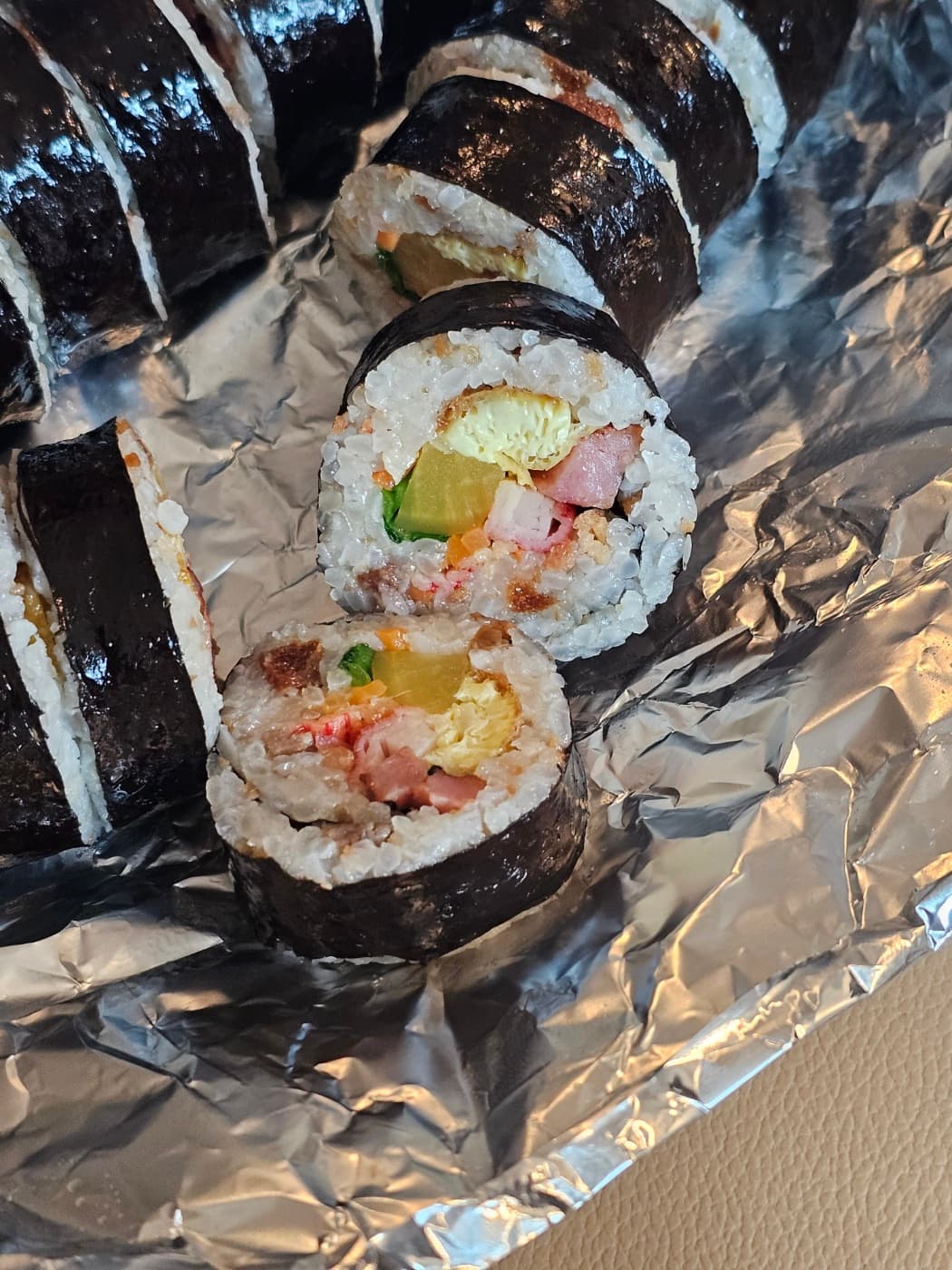
Gimbap, or 김밥, means seaweed rice roll. Gim means seaweed, and bap means rice. The basic idea is simple: seasoned rice and fillings are rolled inside a sheet of dried seaweed, then sliced into small round pieces.
It looks neat.
But it does not feel fancy.
That is part of the charm.
Gimbap is everyday food. It is the kind of thing Koreans buy when they need a quick meal, pack when they are going somewhere, or order beside tteokbokki at a bunsik shop. It can be homemade, cheap, casual, nostalgic, or surprisingly satisfying depending on the moment.
If you are new to Korean food, you may compare gimbap to sushi.
That comparison is understandable because both use seaweed, rice, and a rolled shape. But gimbap has a different feeling. Sushi often uses vinegared rice and may focus on raw fish. Gimbap usually uses rice seasoned with sesame oil and salt, and the fillings are often cooked, pickled, or prepared in advance.
The flavor is warmer and more everyday.
Not restaurant-special.
More lunchbox-comfort.
A classic gimbap often includes pickled yellow radish, egg, carrot, spinach, and some kind of protein like ham, beef, or crab stick-style filling. But there is no single fixed version. Shops and families make it differently.
That is why gimbap menus can be longer than visitors expect.
Tuna gimbap is one of the easiest versions to try. It usually has tuna mayo, vegetables, and rice rolled together, making it soft, savory, and familiar for many first-time visitors.
Cheese gimbap is another common choice. The cheese makes the roll feel a little richer, especially if you are eating it with spicy tteokbokki.
Vegetable gimbap is simple and light.
Beef gimbap feels more filling.
Kimchi gimbap can be sharper and more Korean in flavor.
Mini gimbap, or 꼬마김밥, is smaller and often served with mustard-style dipping sauce. It is easy to eat quickly, and it feels more snack-like than a full roll.
Chungmu gimbap, or 충무김밥, is a different style from Tongyeong. It is usually served as small plain rice rolls with spicy squid or radish side dishes. It may surprise people who expect every gimbap to have many fillings inside.
This variety is part of why gimbap is so useful.
It can be a meal.
It can be a snack.
It can be part of a picnic.
It can be something you grab from a convenience store before a train.
It can be something a parent makes in the morning for a school trip.
In Korea, gimbap has a strong picnic and school-trip feeling.
Many Koreans remember opening a lunchbox and seeing rows of gimbap inside. It is easy to share, easy to pack, and easy to eat without a fork or spoon. That makes it perfect for moving around.
Mountains, parks, buses, trains, school events, family outings — gimbap fits all of them.
But gimbap also belongs to bunsik culture.
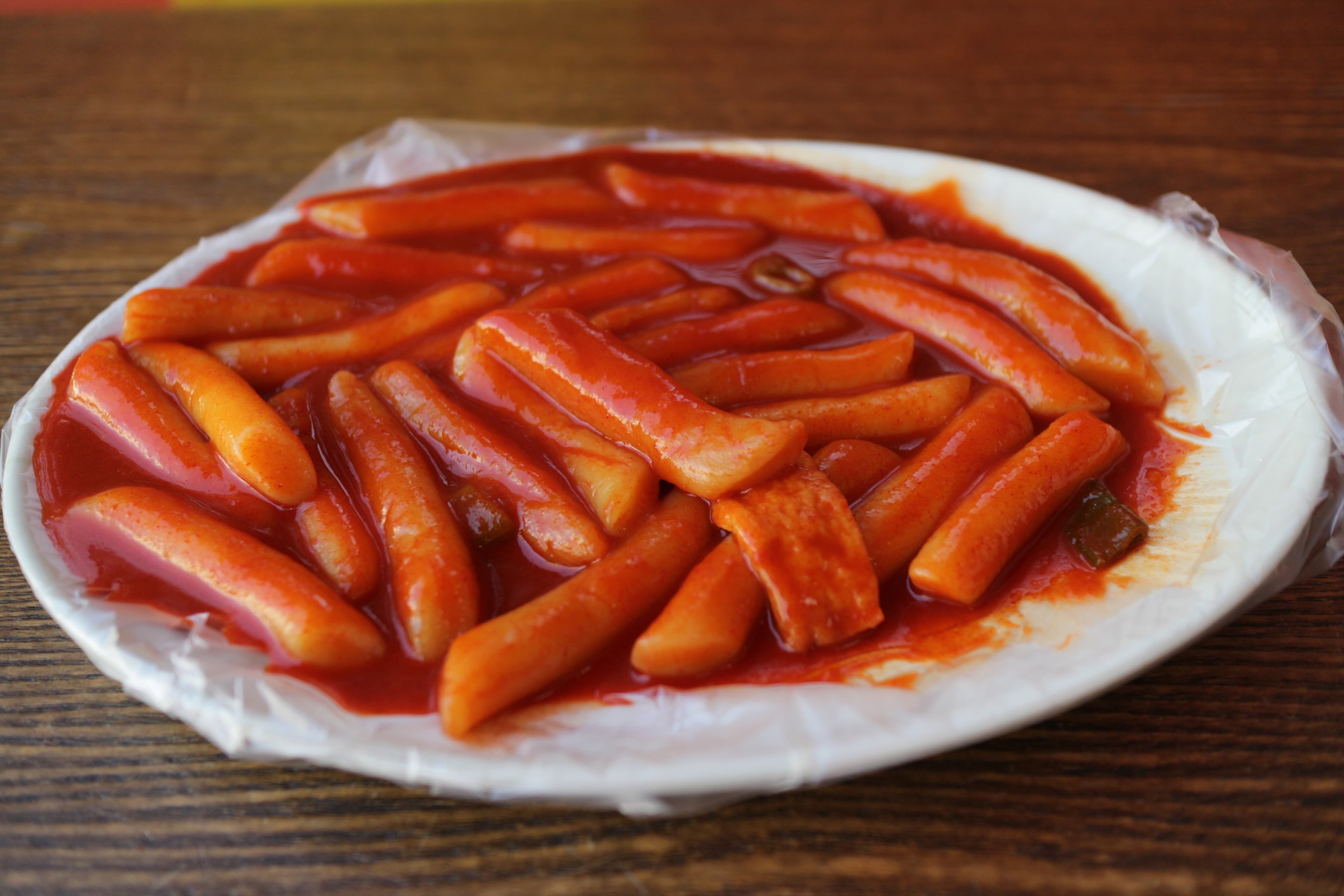
At a bunsik shop, gimbap often sits next to tteokbokki, ramyeon, eomuk, twigim, and sundae. If tteokbokki is spicy and saucy, gimbap helps balance it. You can dip a piece of gimbap into tteokbokki sauce, and that small habit makes the meal feel very Korean.
This is one of the easiest local pairings to try.
Order tteokbokki.
Order one roll of gimbap.
Dip one piece lightly into the red sauce.
That is it.
You will understand why the two foods appear together so often.
Gimbap also works well with ramyeon. The noodles are hot and salty, while the gimbap gives you rice, vegetables, and something more filling. At convenience stores, triangle kimbap may be more common as a quick snack, but full gimbap rolls are also easy to find in many places.
The quality can vary a lot.
A fresh handmade gimbap from a good shop feels different from a packaged convenience store roll. Homemade gimbap feels different again. Some are packed with fillings. Some are mostly rice. Some taste strongly of sesame oil. Some are drier. Some are made to be cheap and fast.
That does not mean only one version is correct.
It means gimbap changes with the situation.
If you are tired and need something easy, convenience store gimbap can be useful.
If you are near a busy bunsik shop, fresh gimbap is better.
If someone makes it at home, that can feel more personal than anything you buy.
For first-time visitors, start simple.
Try classic gimbap or tuna gimbap first. Add tteokbokki if you want the bunsik-shop feeling. Add ramyeon if you want a quick meal. If you see mini gimbap, try it as a snack. If you visit a market or a regional restaurant, you may find a version that feels very different from the basic one.
Do not worry too much about finding the "best" gimbap. A good first gimbap is usually fresh, easy to eat, and next to something warm or spicy.
Gimbap is a food for movement — mornings, buses, small shops, school memories, hiking bags, quick lunches, and dipping into tteokbokki sauce when nobody is trying to be elegant. That everyday feeling is why gimbap has stayed so close to Korean daily life: useful, familiar, and quietly comforting.
Keep exploring
Food guide
A local-friendly guide to Korea’s spicy rice cake snack, from chewy tteok and red sauce to bunsik shops, markets, and classic add-ons.
Read guide →
Food guide
A local-friendly guide to Korean fish cake, from street-stall skewers and warm broth to the many shapes you see in tteokbokki, soup, and snack shops.
Read guide →
Food guide
A local-friendly guide to Korean cup ramyeon, hot water machines, convenience store counters, and easy local pairings.
Read guide →
Food
Simple HAEMIL food guides for understanding what to eat in Korea and how to order without turning every meal into homework.
Read guide →