Some restaurants have staff who take your order; others use kiosks, tablets at the table, or counter ordering where you pay first. Some let you eat first and pay at the counter later. Water may be self-service, and a table bell may be how you call staff. During busy hours, everything can move quickly — none of this is wrong, just different from what you might know at home.
First thing to know
There is not one single restaurant system in Korea. A small gimbap shop, a Korean BBQ restaurant, a cafe, a food court, a bunsik place, and a traditional soup restaurant may all work differently — so if one place feels confusing, look around for small clues: a kiosk near the entrance, a menu on the wall, a tablet on the table, people paying before they sit, a table bell, or water near a self-service corner. These usually tell you what to do.
Ordering from staff
In many simple restaurants, you sit down, look at the menu, and order from staff. If you do not speak Korean, pointing is completely normal — point to the menu and say “이거 하나 주세요.” (“One of this, please”). Pronunciation does not need to be perfect; most staff will understand if you point clearly and stay polite.
Tourist areas
In tourist-heavy areas like Myeongdong, Hongdae, Insadong, Gangnam, or near major attractions, restaurants may be more used to foreign visitors — some have English or picture menus, which can make ordering easier. The trade-off is that these areas can be more expensive or crowded because they are convenient and visitor-friendly. For a first trip, easy ordering can be worth it; for better value, walk one or two streets away from the busiest road.
Kiosks
Kiosks are common in casual restaurants, cafes, fast-food places, and food courts — you choose food and pay on a machine before eating. Some have English and accept foreign cards smoothly; others do not. If a kiosk feels difficult, look for a language button first (English, EN, or a globe icon). If it still does not work, choose another place or ask staff politely. Kiosks are convenient when they work, but they can feel stressful when the line behind you is moving fast — that is normal.
Table tablets and counter ordering
Table tablets let you sit down, choose food, and send the order from the table — easier than speaking, though menus may still be mostly Korean, so photos help. If you are unsure, choose simple dishes you recognize or use a translation app carefully. At some restaurants you order at the counter first, pay, get a receipt or number, and wait — common in cafes, food courts, noodle places, and casual spots. When your number is called or shown on a screen, pick up your food. After eating, you may need to return the tray yourself; if other people are carrying trays back, you probably should too.
Water and utensils
Water is often self-service — many restaurants have a water machine, cups, or a water bottle area, though sometimes water is already on the table or staff bring it. If you do not see water, look near the wall, counter, or self-service corner; utensils may be there too. Spoons, chopsticks, napkins, scissors, tongs, or extra side dishes can sit in a drawer under the table or near a self-service station, which can surprise first-time visitors — in Korea, opening the table drawer for spoons and chopsticks is very normal.
Side dishes (banchan)
Side dishes are called banchan — many Korean meals come with small plates like kimchi, pickled vegetables, fish cake, or salad. In some restaurants, side dishes are refilled for free; in others, only some are refillable, and in self-service places you may get more from a side-dish corner. Do not assume every side dish can be refilled endlessly, but if the place clearly has a self-service banchan area, taking a reasonable amount is usually fine. Take a little first and go back if you need more.
Table bell and payment
If there is a small button on the table, press it when you need staff — to order, get more water, ask for extra side dishes, or get help. This is not rude; it is part of the system. Without a bell, raise your hand slightly or make eye contact — in busy restaurants, staff may not check on your table unless you call them. Payment often happens at the counter after eating: you finish, stand up, and pay near the entrance or cashier, and staff may already know your table number. At kiosks or cafes, you usually pay first — both systems are normal, so watch what other customers do. Tipping is not part of Korean restaurant culture; just pay the amount shown.
Spicy food and solo dining
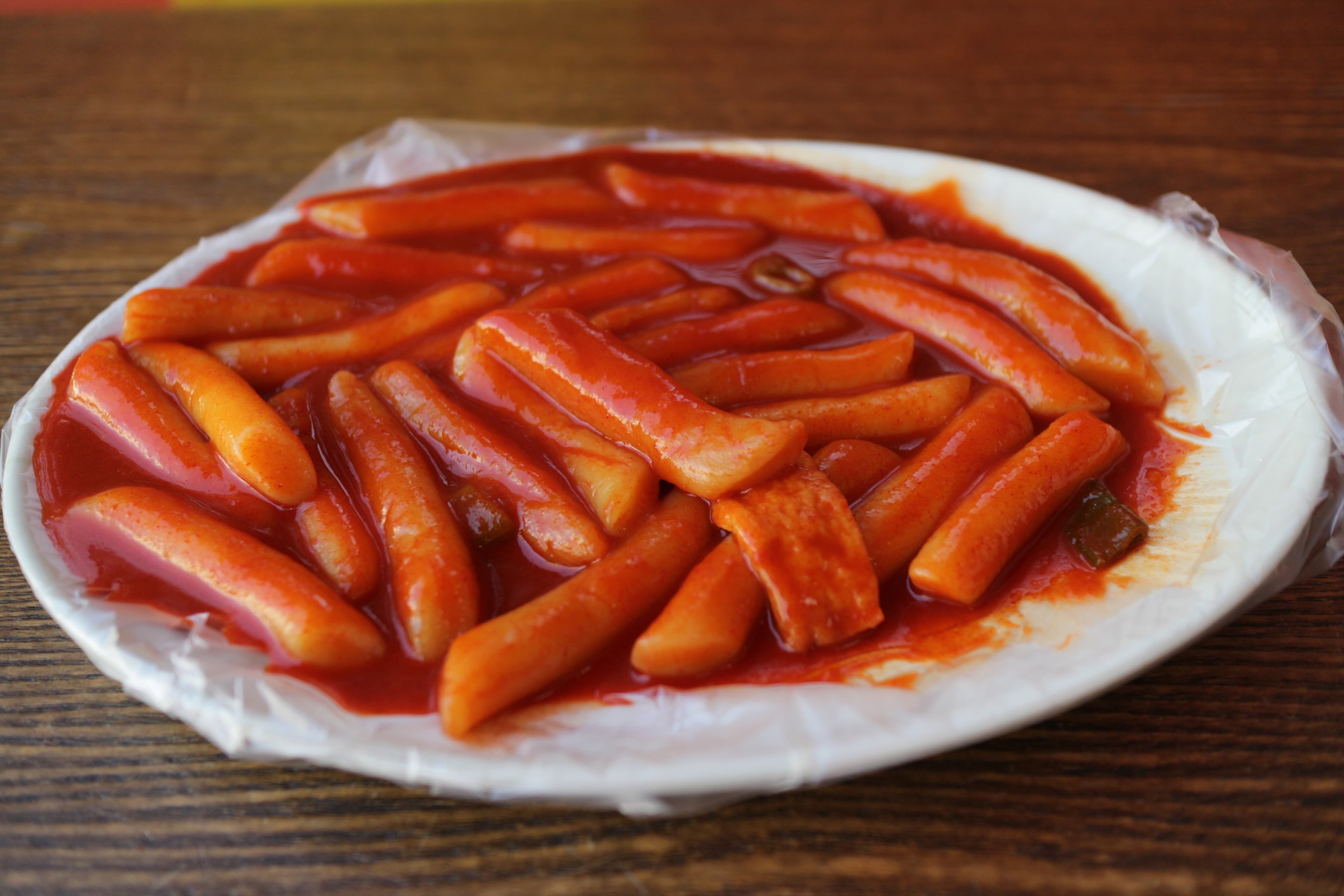
Some Korean food is mild, but spicy dishes can run stronger than expected — tteokbokki, spicy stews, spicy noodles, and red-sauce dishes vary a lot by restaurant. If you are sensitive to spice, start with gimbap, kalguksu, seolleongtang, gukbap, dumplings, grilled meat, porridge, or non-spicy noodles. Solo dining is possible, but some foods are easier: gimbap, noodles, soups, stews, convenience store meals, bunsik, food courts, cafes, and simple rice dishes are usually solo-friendly. Korean BBQ can be harder alone because some restaurants expect at least two servings of meat or are designed for groups — not impossible, but maybe not the smoothest first restaurant experience. On your first day alone, a gimbap place, noodle shop, soup restaurant, food court, or convenience store meal can feel much less stressful.
Busy times
During lunch, dinner, weekends, or after work hours, restaurants can move quickly — staff may not have time to explain everything slowly, and popular or tourist areas can have lines. If you feel nervous, eat a little earlier or later than the busiest meal time; a quieter restaurant makes the first ordering experience much easier.
Save a few food names
Saving a few food names before you go helps — gimbap, tteokbokki, kalguksu, gukbap, bibimbap, fried chicken, Korean BBQ, soft tofu stew, or convenience store cup ramyeon. When you recognize even one word on a menu, the restaurant feels less intimidating.
Stay flexible: try the language button on a kiosk, use the table bell when you need staff, check for self-service water, try side dishes a little at a time, and pick an easier place if the room feels too busy. Save Korean BBQ for when you have company or more energy. Most first-time visitors learn by watching the room — look around, point clearly, stay polite, and choose food that matches your energy. Korean restaurants become much easier after the first few meals, and once ordering feels less stressful, the food becomes much more fun.