




K-drama guide
Why Itaewon Class Is a Good First K-drama for Understanding Korea
Itaewon Class is one of those K-dramas that many international viewers still remember by mood.
K-drama guide
Itaewon Class is one of those K-dramas that many international viewers still remember by mood.
Quick facts
Official clip
The haircut. The street. The pub. The revenge. The song that sounds like someone trying to stand up again.
It aired on JTBC in 2020, ran for 16 episodes, and became one of the dramas that helped many viewers outside Korea step deeper into modern K-drama. In Korea, it was also a real hit. The final episode recorded 16.548% nationwide paid-household viewership in Korea, according to Nielsen Korea reports, which is a very strong number for a cable drama. It was widely recommended to international K-drama viewers through Netflix and overseas media lists.
But Itaewon Class is not memorable only because it was popular.
It is memorable because it takes several very Korean feelings and puts them into one easy-to-follow story.
At first, the drama looks like a revenge story. Park Sae-ro-yi, played by Park Seo-joon, is a young man who refuses to kneel when someone powerful tells him to. That one stubborn choice changes his life. Years later, he opens a small bar-restaurant called DanBam in Itaewon and starts building his own path against people with more money, more connections, and more power.
That setup is simple.
The feeling underneath it is not.
In Korea, the idea of refusing to kneel hits differently. Korean dramas often use hierarchy very strongly: school seniors and juniors, company bosses and workers, rich families and ordinary people, powerful parents and powerless young adults. Itaewon Class turns that pressure into one clear image. Sae-ro-yi is not the smartest person in every room. He is not smooth. He is not flexible. But he has one thing he refuses to give away: his own line.
That is why Korean viewers remembered him.
He is stubborn in a way that can feel frustrating, but also comforting. In a world where people are often told to be practical, quiet, and careful, Sae-ro-yi becomes a fantasy of someone who says, "No, I will live my way."
The setting matters too.
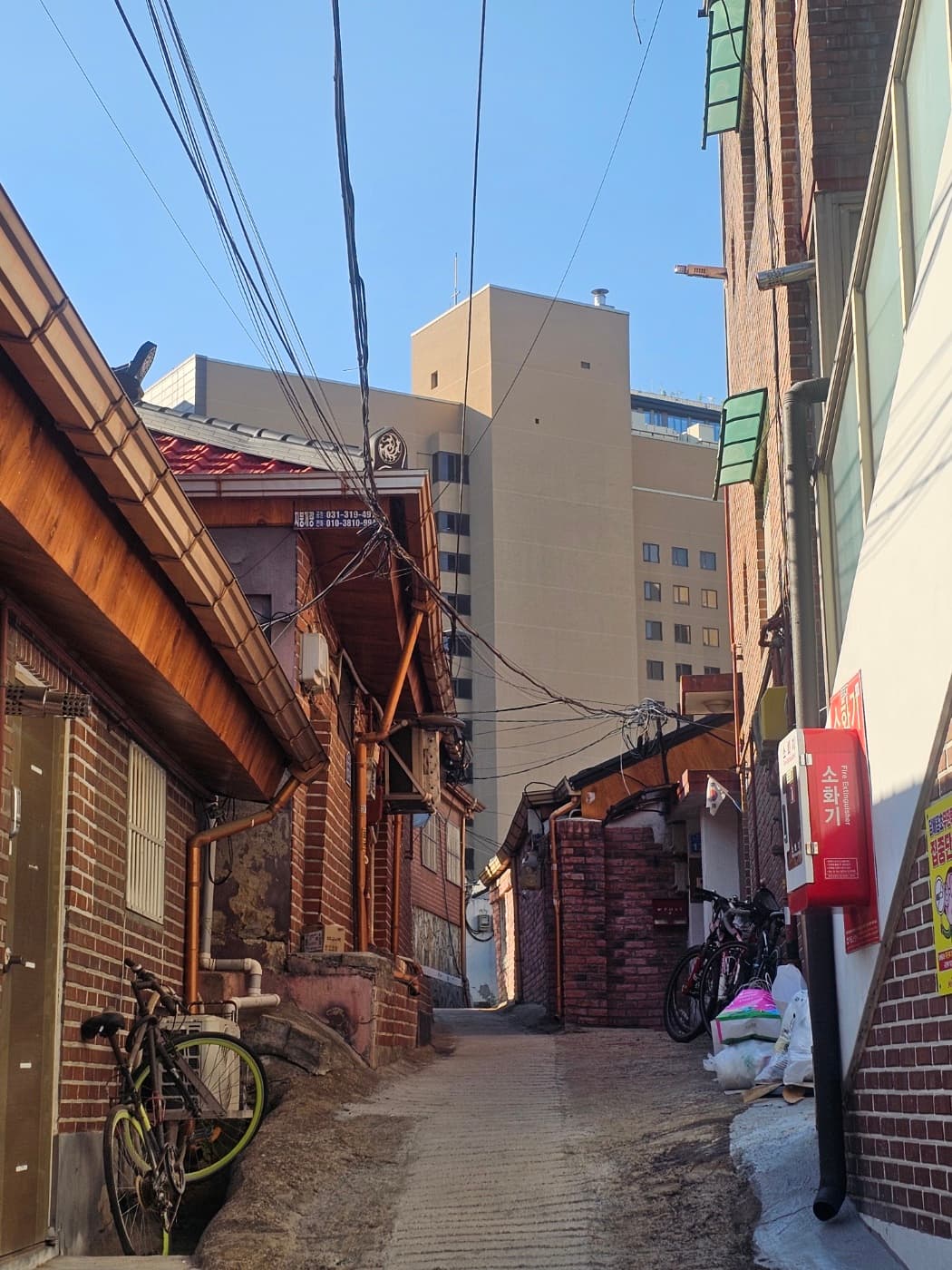
Itaewon is not just a random Seoul neighborhood. It has long been known as one of Seoul's more international, mixed, and open-feeling areas. You can feel different languages, different restaurants, different music, different kinds of people. For a drama about outsiders trying to build their own place, Itaewon is a very fitting stage.
DanBam, the small pub in the story, is also important.
It is not a glamorous office or a giant company at first. It is a small place with tables, food, drinks, mistakes, staff problems, and late nights. That makes the dream feel closer. Many Korean viewers understand the fantasy of opening a small restaurant, bar, café, or pocha-style place. It is risky, exhausting, and not always romantic, but it feels like a dream you can imagine with your own hands.
That is one reason the drama worked.
It turns business into emotion.
DanBam is not only a restaurant. It is Sae-ro-yi's pride, his revenge, his home, and his promise to himself. When the team improves the food, changes the store, argues, fails, and tries again, the drama becomes less about "becoming rich" and more about surviving without losing your shape.
This is also where Jo Yi-seo, played by Kim Da-mi, changes the energy of the show.
Yi-seo is sharp, strange, difficult, and very modern. She does not feel like a soft helper character. She enters the story with her own ambition and her own uncomfortable edges. For some viewers, she was refreshing. For others, she was hard to like at first. But that friction is part of why the drama stayed interesting.
Itaewon Class also talks about unfair power.
In Korean, people often use the word gapjil for abusive behavior from someone in a stronger position. A boss abusing workers. A rich family humiliating someone. A powerful person expecting others to bow, apologize, or disappear. Itaewon Class is full of that feeling.
The villain is not scary only because he is rich.
He is scary because he represents a system where power expects obedience.
That is why Sae-ro-yi's refusal feels bigger than one personal fight. It becomes a small emotional rebellion against a world where ordinary people are often told to accept unfairness because "that is just how things work."
For international viewers, this is one reason Itaewon Class is a good first K-drama.
You can enjoy the story without understanding every Korean social detail. But if you pay attention to the hierarchy, the restaurant dream, the neighborhood, the pressure to kneel, and the meaning of starting over, the drama becomes much more Korean than it first appears.
The OST helped too.
Gaho's "Start Over" became one of the songs people strongly connect with the drama. Even if you forget some plot details, that emotional push remains: run again, stand again, try again. It matches the whole drama's mood so clearly that the song almost feels like part of Sae-ro-yi's character.
That is why Itaewon Class still works as a cultural entry point.
It is not the softest K-drama. It is not the most realistic business story. Some parts feel dramatic, and some viewers may feel the later episodes move differently from the early ones. But the center is easy to understand: a young person gets crushed by unfair power, refuses to disappear, and builds a place where he can stand.
That feeling travels well.
Even if you have never been to Itaewon, you can understand wanting a place of your own.
Even if you do not know Korean workplace hierarchy, you can understand the anger of being told to kneel.
Even if you do not know every K-drama trope, you can understand the hope inside the words "start over."
For HAEMIL readers, that is the best way to watch Itaewon Class.
Do not treat it only as a revenge drama. Watch it as a story about a city street, a small store, a stubborn young man, and the Korean feeling of trying to live without bending too much.
That is why it stayed memorable.
Not just because it was a hit.
Because it made "starting over" feel like a whole mood.
Keep exploring
K-drama guide
A gentle Seoul guide for K-drama fans, connecting everyday drama scenes with real places like the Han River, cafes, and night views.
Read guide →
Travel guide
Map-friendly HAEMIL guides for understanding Seoul by area, mood, and local movement.
Read guide →
Drama / Film
HAEMIL guides for understanding Korean dramas, films, city moods, and the cultural details that make them feel familiar.
Read guide →
Travel guide
Itaewon, Hannam, Haebangchon, global food, hillside streets, art spaces, and mixed local-global Seoul.
Read guide →