



Food guide
What Is Dujjonku (두쫀쿠)? Korea's Dubai Chewy Cookie, Explained
If you saw a ball-shaped cocoa-dusted dessert spreading through Korean cafés in 2026, that was dujjonku — and it did not come out of nowhere.
Food guide
If you saw a ball-shaped cocoa-dusted dessert spreading through Korean cafés in 2026, that was dujjonku — and it did not come out of nowhere.
Quick facts
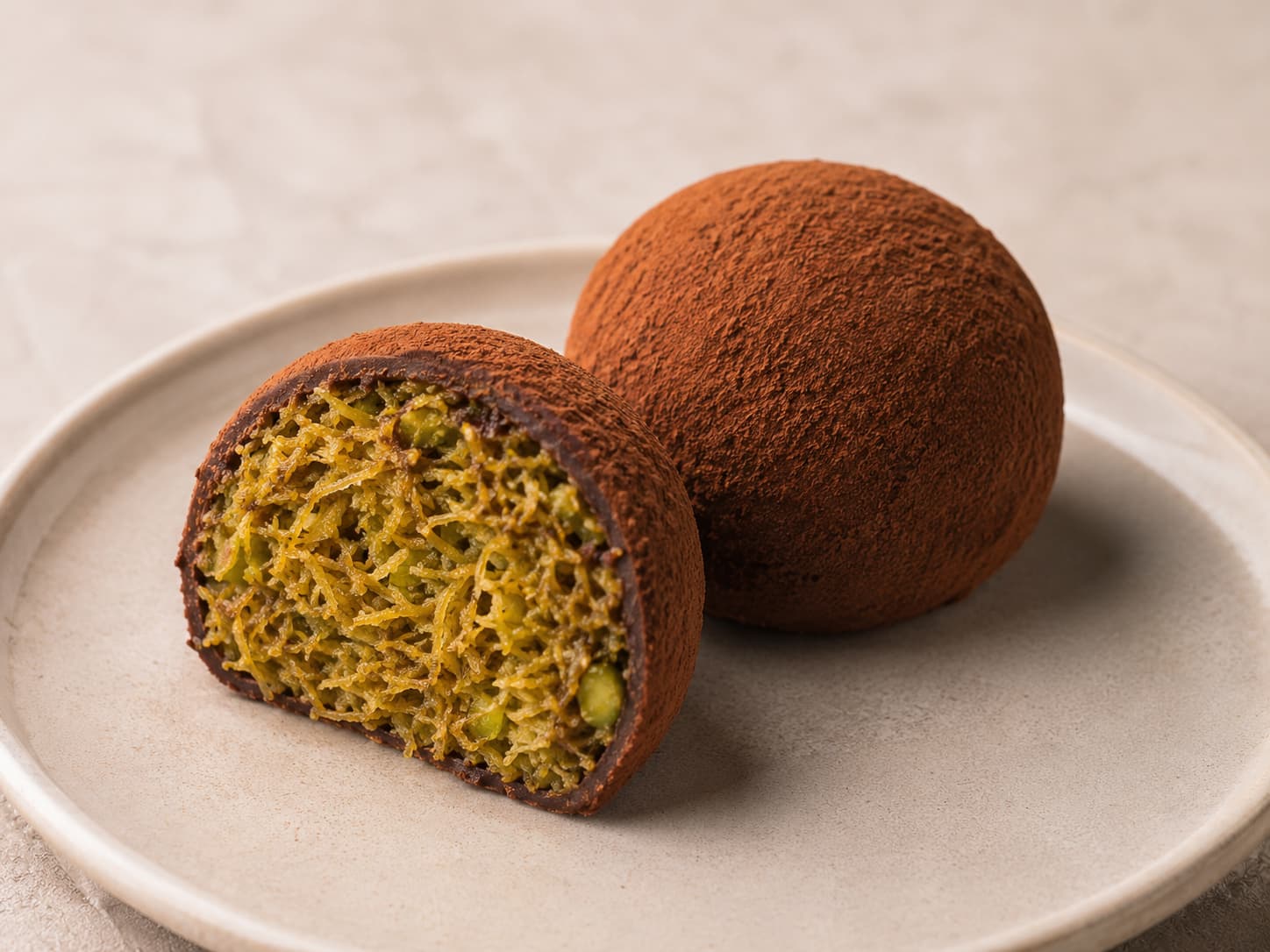
Dujjonku (두쫀쿠) is Korean shorthand for 두바이 쫀득쿠키, or "Dubai chewy cookie." It is a small, ball-shaped treat built around a chewy, marshmallow-like shell wrapped around a filling of butter-fried kadayif (thin shredded pastry threads) and pistachio cream, then dusted in cocoa powder for a look that is often compared to a truffle. Bite into one and you get a mix of textures in a single piece: stretchy on the outside, crunchy in the middle, and rich with pistachio flavor throughout.
Dujjonku did not appear out of nowhere — its direct background is the Dubai chocolate trend. The original Dubai chocolate bar, filled with pistachio cream, tahini, and crunchy kadayif, went viral in Korea starting in 2024 after short-form videos showing its gooey, fibrous cross-section spread widely online. Korean bakers took that same flavor combination — pistachio and kadayif — and reworked it into a new, chewier cookie format in 2025, and by early 2026 it had become a viral dessert in its own right, with independent cafés and convenience store chains like CU and GS25 both selling their own versions. Some coverage also linked a widely shared celebrity social media moment to the early-2026 jump in demand, though by most accounts the trend was already building before that. Exactly who made the first version, and precisely when, is not something that can be pinned down from available reporting, so this page does not claim a single inventor or an exact starting date.
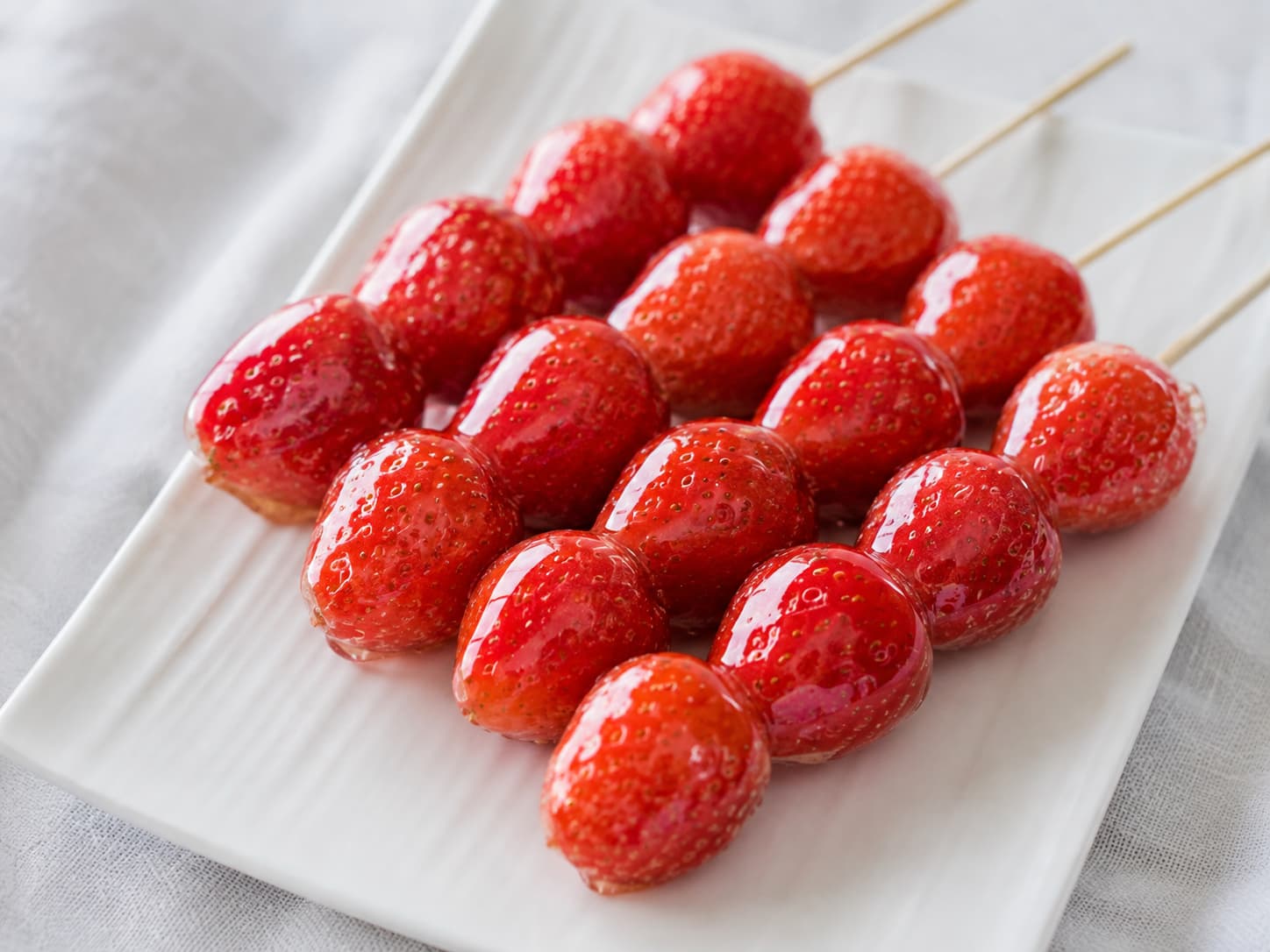
Dujjonku is really just the latest stop in a pattern that keeps repeating in Korea. Tanghulu — candied fruit on a skewer, coated in a hard sugar shell — was one of the biggest viral snacks in Korea before any of this, surging across Korea in 2023 as ASMR videos of the crackling sugar shell took over social media. Tanghulu did not create dujjonku, and the two trends are not directly connected; the more accurate way to think about it is that Korea's dessert scene simply moves through viral trends quickly, one after another. Tanghulu had its moment, Dubai chocolate followed, and dujjonku became one of 2026's clearest examples of that same fast-moving dessert cycle.
Because dujjonku is really three components layered together — kadayif, marshmallow, and pistachio spread — small differences in each one add up to a very different final bite. Recipes vary in how crisp the kadayif is, how thick and chewy the marshmallow layer feels, and how generous or strongly flavored the pistachio filling is. None of these choices is objectively "correct" — they just explain why two dujjonku from two different cafés can taste like fairly different desserts.
I tried dujjonku from several shops in Korea, and the texture varied more than I expected. Some had very crunchy kadayif, while others were much softer, and the marshmallow layer could range from light and stretchy to quite dense and chewy. The biggest difference for me was the pistachio filling — versions with a stronger, higher-quality pistachio flavor and a more generous amount of it tasted noticeably richer and better balanced. For me, it is really that balance between kadayif, marshmallow, and pistachio that decides whether a dujjonku is just okay or genuinely great, more than any single ingredient on its own.
Keep exploring
Food guide
Another 2026 Korean viral dessert — a baked glutinous-rice treat with its own short, fast-moving trend cycle.
Read guide →
Food guide
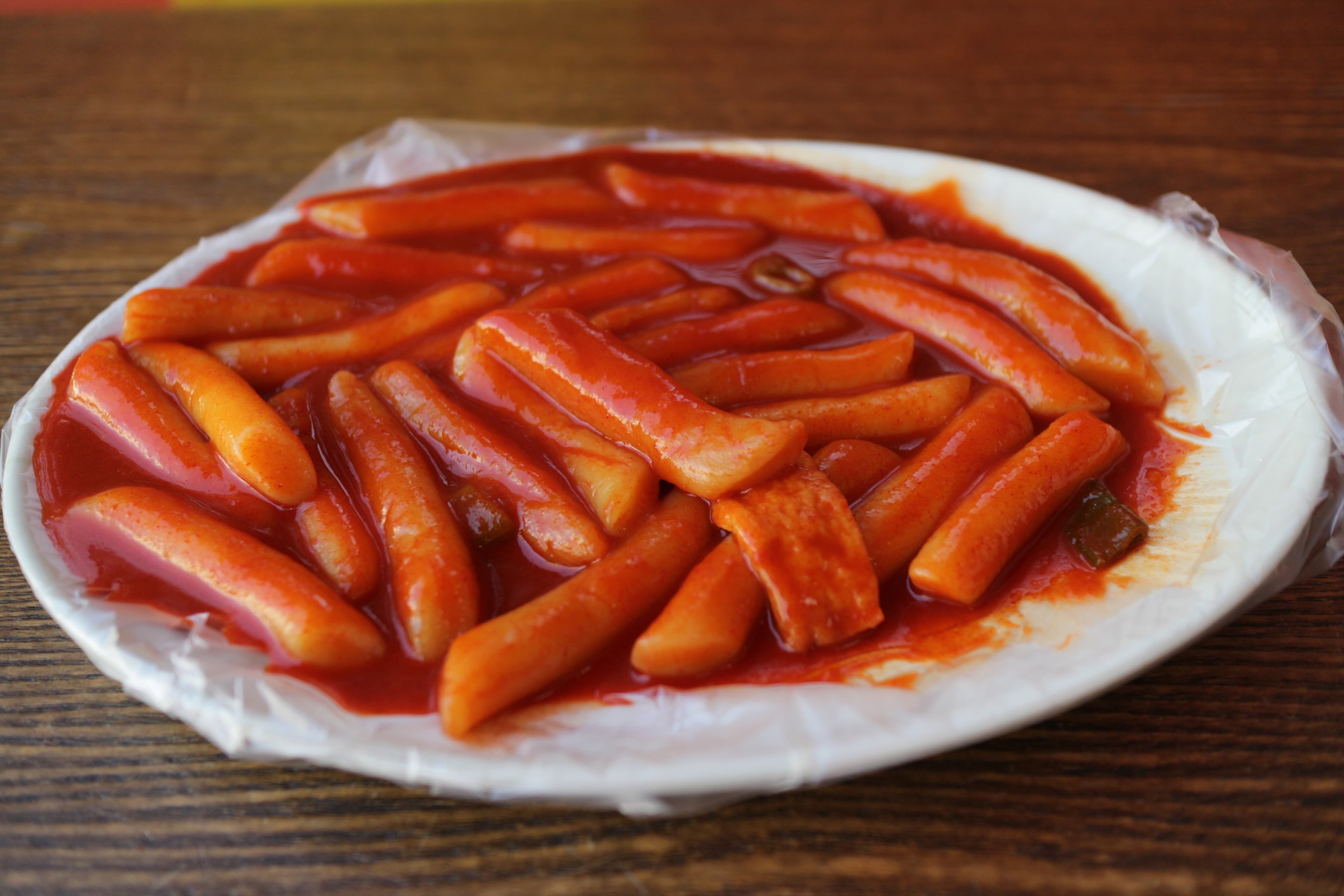
Chewy rice cakes in red sauce — one of Korea's most everyday comfort foods, and a very different kind of chewy.
Read guide →
Food
Simple HAEMIL food guides for understanding what to eat in Korea and how to order without turning every meal into homework.
Read guide →