




Food guide
What Is a Korean Corn Dog?
A Local Guide to Korean Hot Dogs
In Korea, the snack English speakers call a "Korean corn dog" is usually just called 핫도그 (hatdog).
Food guide
A Local Guide to Korean Hot Dogs
In Korea, the snack English speakers call a "Korean corn dog" is usually just called 핫도그 (hatdog).

Quick facts
Search for "Korean corn dog" in English and you’ll probably picture a fried snack on a stick. In Korea, though, most people simply call that 핫도그 (hatdog). The slightly confusing part is that the sausage-in-a-bun version can also be called a hot dog here. If someone points at a snack-shop menu and says 핫도그, they may mean the fried one on a stick; at another shop, the same word can mean a sausage in a bun. Usually, the place and the menu make it obvious.

The biggest difference is the outside. A classic American corn dog is known for its cornmeal batter. Korean hot dogs usually use a wheat-based dough or batter, often finished with breadcrumbs, although the exact recipe changes from shop to shop. That gives the Korean version a thicker, crunchier outside and also makes it easier to add cheese, potato pieces, or other coatings.
Korean hot dogs are more flexible than one sausage-and-batter formula. Sausage is the familiar starting point, but you can also find mozzarella, half-sausage-half-cheese versions, and hot dogs with rice cake (tteok) inside instead of sausage. The outside changes too: some are kept simple, while others are coated with potato pieces or other crunchy toppings.
Chains also occasionally play with the format for limited-time or novelty menus. One memorable example came from Myungrang Hot Dog, which temporarily sold a cucumber hot dog with a whole cucumber in place of the sausage. These experimental versions are not what Koreans mean by a standard hot dog, but they show how loosely the basic idea can be interpreted.
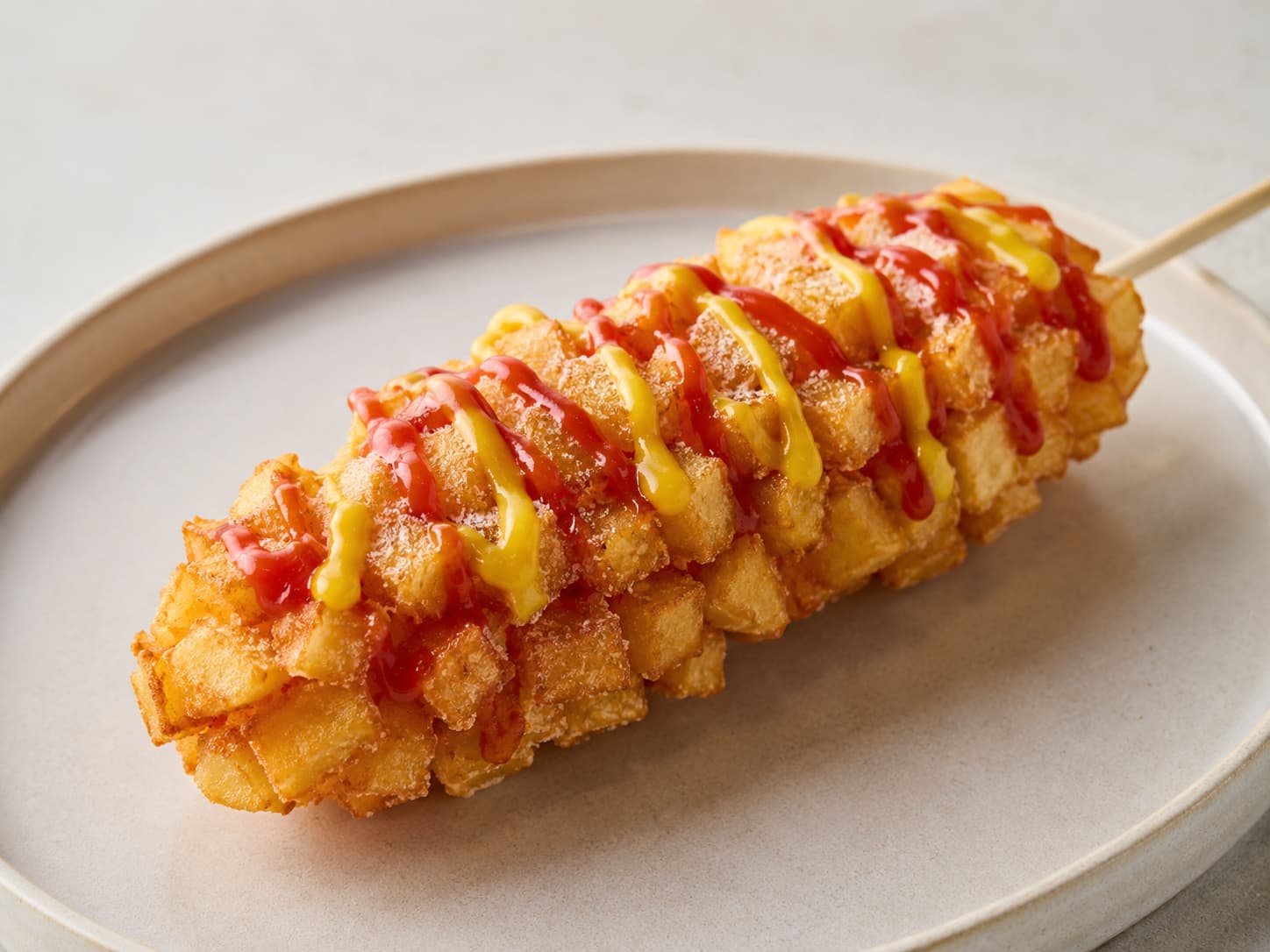
If it is your first one, start with the plain sausage version rather than jumping straight to the cheese-pull versions you see online — it gives you the clearest idea of what a normal Korean hot dog tastes like. From there, it is easy to branch out: mozzarella if you want the cheese pull, 감자핫도그 (potato hot dog) if you want something crunchier and more filling, or a tteok (rice cake) version if you want the inside swapped out entirely. Depending on the shop, you may be asked whether you want sugar on the outside before ketchup or mustard goes on top — that sweet-and-savory combination can sound strange at first, but it is a familiar hot-dog-shop style in Korea.
Korean hot dogs became much more visible overseas through cheese-pull videos and "Korean corn dog" shops, but in Korea the food itself does not feel like a new internet trend. It is a familiar snack-shop food — the kind of thing people have eaten long before it became an English-language social-media category.
Keep exploring
Food guide
A local-friendly guide to Korea’s spicy rice cake snack, from chewy tteok and red sauce to bunsik shops, markets, and classic add-ons.
Read guide →
Food guide
Fish-shaped winter street snacks — red bean bungeoppang and the cold-day stall mood that feels local, not staged.
Read guide →
Food guide
Fun first-time snacks in Myeongdong, with tourist-price reality on the main streets and easier bites one alley over.
Read guide →
Food guide
Pocha nights explained — anju with drinks, old street tents vs indoor pocha, and the cash and price checks worth doing first.
Read guide →
Food
Simple HAEMIL food guides for understanding what to eat in Korea and how to order without turning every meal into homework.
Read guide →