Pocha is not one exact thing — it is a late-evening mood: small tables, hot food, soju or beer nearby, something salty or spicy in the middle, people talking louder than they meant to. Not quite dinner, not just snacks.
Old-style pojangmacha vs modern indoor pocha
Old-style pojangmacha is the drama image — plastic covers, small stools, steam from broth, a little cramped. Memorable, but menus can be simple, prices less clear, and payment style varies. It is fine to look, check the menu, and keep walking. Modern indoor pocha usually feels more like a casual bar or restaurant, with clearer menus and more seats — still pocha-style food, just not the tent in your head. For a first visit, indoor is often the easier step.
What is anju?
Anju means food eaten with alcohol — salty, spicy, greasy, shareable, not always light. If a stew tastes too salty alone, it may be meant to go slowly with drinks, rice, or other dishes. You do not need to drink heavily; many people come mostly for the food. Pocha is usually built around drinking culture, so expect alcohol around you, but if you do not drink, pick a place where ordering food without much alcohol feels normal.
Easy first pocha foods
Eomuk-tang, also called odeng-tang, is one of the easiest first pocha foods.
It is a warm fish cake soup.
It is simple, comforting, and good on a cold night.
The broth is usually not too difficult for beginners, and the skewers or fish cake pieces are easy to share.
If you are unsure what to order, this is a gentle start.
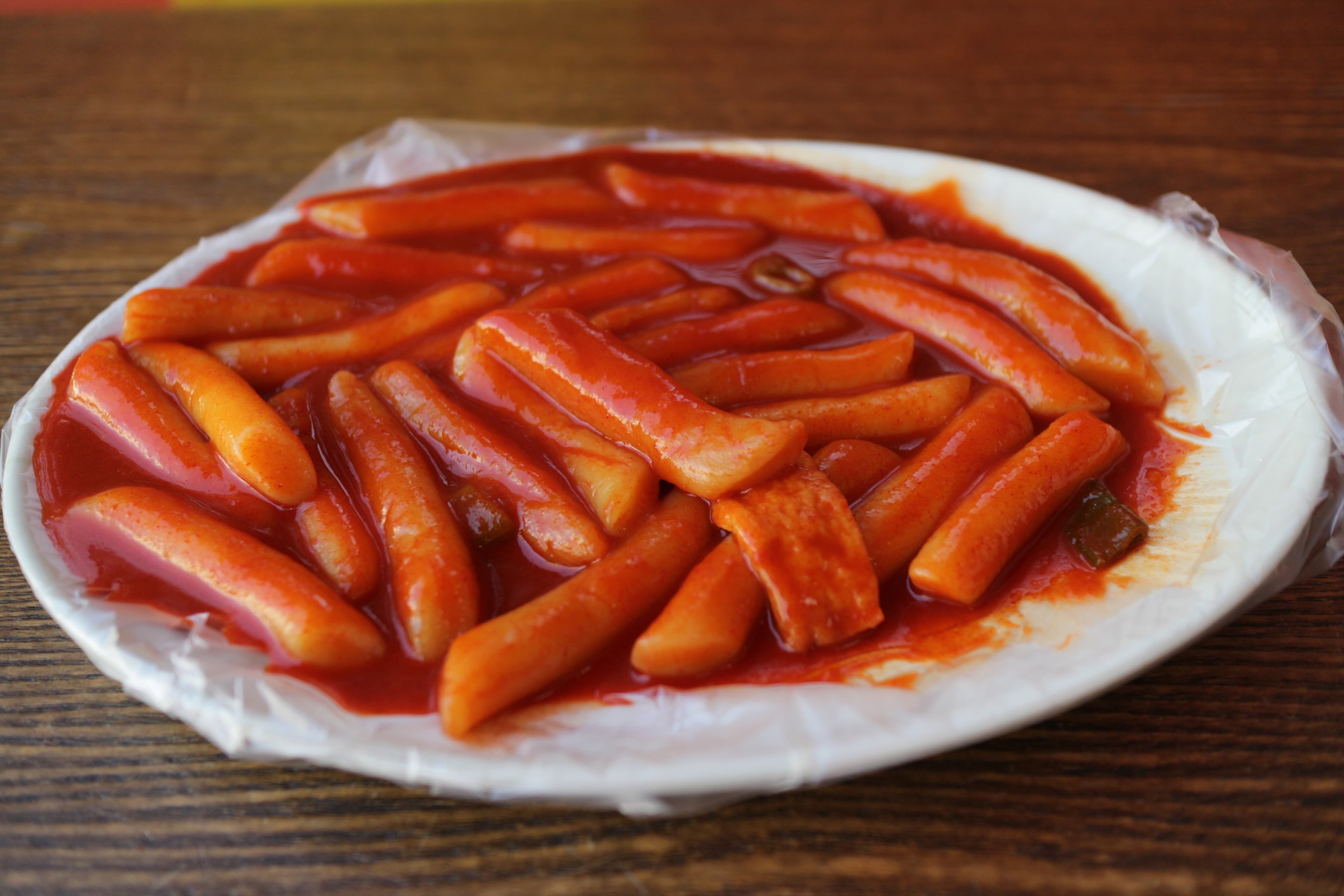
Tteokbokki also works well at night.
It is chewy, spicy, sweet, and familiar to many people who already know Korean street food.
At pocha-style places, it may come in a larger portion than a street snack.
Sometimes it has fish cake, noodles, eggs, or extra toppings.
It is easy to understand, but it can get filling quickly.
Do not order too many heavy dishes with it.
Pajeon or kimchi-jeon is good for sharing.
Jeon is Korean-style pan-fried food, often eaten on rainy days in the Korean imagination.
At night, it works because it is warm, oily, and easy to split between people.
Pajeon has green onion.
Kimchi-jeon has kimchi.
Neither is fancy, but both feel right with a casual drink.
Gyeran-mari is a softer choice.
It is a rolled omelet, usually sliced and shared.
This is good if the table already has spicy food and you want something mild.
It is also one of the easiest pocha foods for visitors who do not want bones, raw food, or extreme spice.
Stronger anju choices
Dakbal is more intense.
Dakbal means chicken feet.
Some people love the spicy, chewy texture.
Some people cannot handle it at all.
It is often very spicy and very much an anju dish.
Do not order it just because it sounds famous.
Order it only if you actually want that texture and heat.
Golbaengi-muchim is another strong anju dish.
It is a spicy, tangy sea snail salad often mixed with vegetables and noodles.
The flavor can be sour, spicy, and sharp.
It is good if you like bold food, but it may surprise first-time visitors.
This is not a gentle beginner dish.
Budae-jjigae or spicy shared stews can also appear in pocha-style nights.
These dishes are good with groups because the pot sits in the middle and everyone eats together.
But shared stews are less convenient if you are alone.
If you are solo, look for smaller dishes, soup bowls, or places where individual ordering feels natural.
Solo travelers and shared tables
Pocha is usually easier with two or more people.
That does not mean solo travelers cannot go.
It just means you should choose carefully.
Some dishes are large.
Some tables expect sharing.
Some places may feel awkward if you only want one small plate and a long stay.
A casual indoor pocha or simple night restaurant is usually easier than a tiny crowded tent if you are alone.
Prices, cash, and payment
Check the menu and price before you sit, especially at night in tourist-heavy areas. Some places are normal; some are expensive because of the location; outdoor or small tents may not show prices as clearly as a regular restaurant. Do not sit down just because someone calls you over. Cash helps at old-style or street-side spots; indoor places often take cards, but payment style varies — do not rely on one method only.
Noise and street manners
Pocha areas get loud — people drink, laugh, and stay late, and that is part of it. Still, do not block narrow sidewalks, stand in doorways, or shout near residential buildings late at night. If you are taking photos, avoid putting strangers clearly in the frame, especially when people are drinking.
Simple first pocha night
Start with eomuk-tang, add one shared dish like pajeon, tteokbokki, or gyeran-mari, and save dakbal or golbaengi for when your group actually wants heat. Pocha food is heavier than it looks — indoor pocha for the easy first night, old-style tent only if you are ready to check price, menu, and payment carefully.
Pocha is worth understanding because it shows a real night rhythm — someone tired after work, someone meeting friends, someone ordering one more dish after saying they were done, someone heading to the subway. Go with curiosity, check the price, bring a little cash, order less than you think, and pick a place clear enough that you can actually relax.