Some aisles still feel local. Others feel built for visitors, and a few stalls can get pushy if you are not used to Korean markets. Treat Gwangjang as a place to try two or three foods and move on — not a checklist where every viral dish has to happen in one visit, and not a place where every price is automatically fair.
Bindaetteok (nokdujeon)
The food most people notice first is bindaetteok, also called nokdujeon.
It is a mung bean pancake cooked on a hot griddle.
You will probably smell it before you decide to eat it.
It is oily, warm, crispy outside, softer inside, and very filling.
It is oily, loud-market food — not delicate, but exactly what makes sense on a hot griddle in a narrow aisle. The only caution is that it can be heavy.
If you eat a whole one alone, you may not have much room left for anything else.
If you are with someone, sharing is better.
Mayak gimbap
Mayak gimbap is another easy food to try.
It is a small, simple gimbap, usually eaten with a dipping sauce.
Think of it as a small bite between other foods — easy to pick up and share, not a full meal. It is famous now, so it will not feel like a secret find, and that is fine.
Yukhoe
Yukhoe is one of the most famous foods around Gwangjang Market.
Yukhoe is Korean-style raw beef.
Some visitors come to the market specifically for it.
Japanese visitors may be especially curious about yukhoe because raw beef dishes are much more sensitive and tightly regulated in Japan than in Korea.
But yukhoe is not something everyone has to try.
If you are uncomfortable with raw meat, skip it.
If you do try it, choose a place that looks clean, busy in a normal way, and clear about what it serves.
Do not eat raw beef just because a guide says it is famous.
Eat it only if you actually want to.
Kalguksu and noodle bowls
Kalguksu or warm noodle bowls are good when the market starts to feel too oily.
A bowl of noodles can slow things down.
It feels more like a meal and less like chasing snacks.
This can be a good choice if you are tired, cold, or overwhelmed by the crowd.
Tteokbokki, eomuk, and market snacks
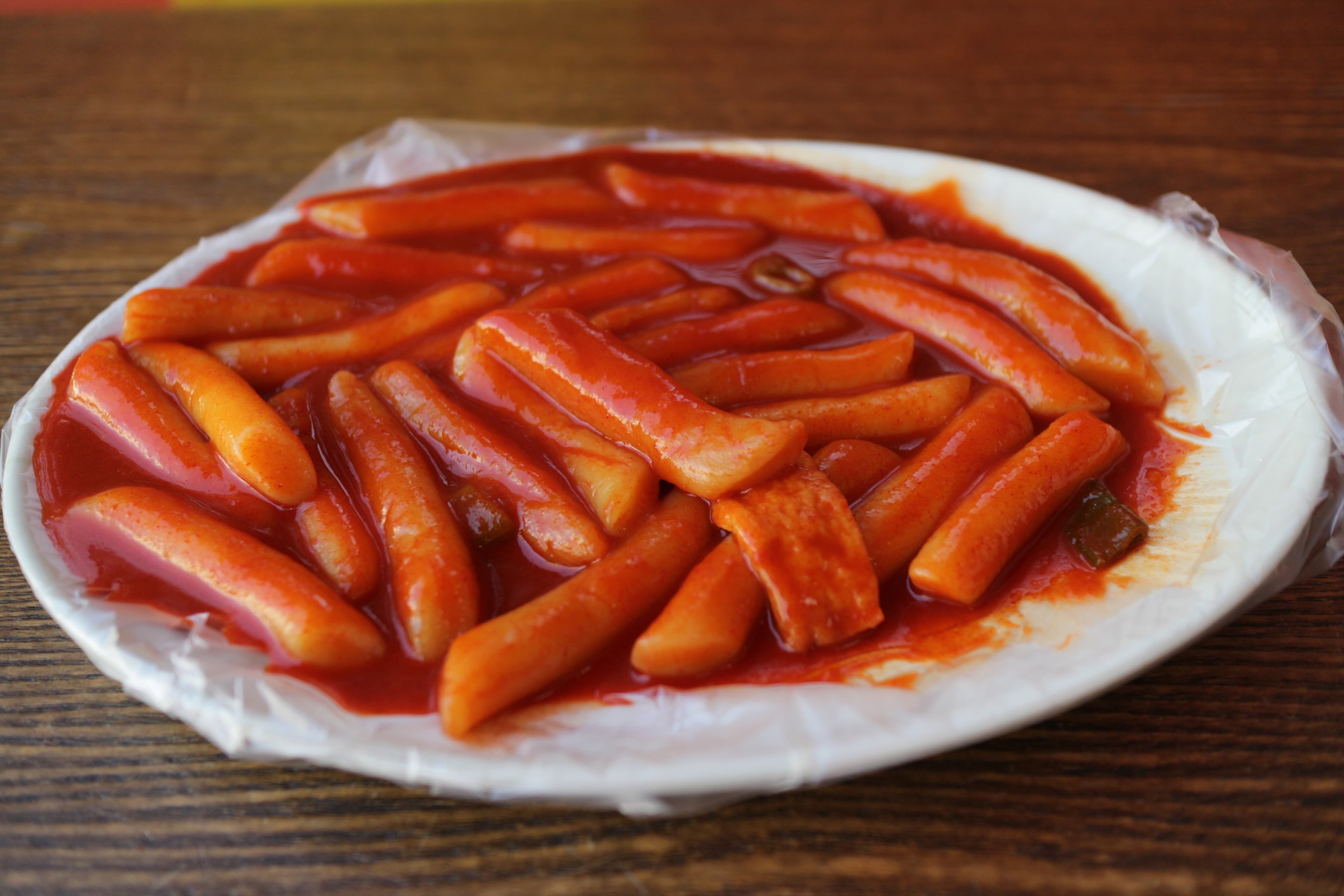
Tteokbokki, eomuk, and other simple market snacks are also easy to find.
They are familiar Korean street foods, but the same warning applies:
do not order too much at once.
Market food gets heavy faster than you think.
A few bites here and there can be more enjoyable than forcing a full checklist.
Cash, prices, and payment
Bring small cash. Some stalls take cards, but payment style varies, and relying on one method can leave you stuck at the counter.
Check the price before you sit or order. Gwangjang gets a lot of foreign visitors, and food-alley prices are not always the best value — that does not mean every vendor is dishonest, but it does mean you should look for a visible menu, ask if needed, and keep walking if someone calls you over without a clear price. There are many stalls.
Moving through the market
The aisles are narrow — people stop for photos, staff call out to customers, and someone behind you may be carrying hot food. Step to the side before checking your phone, take photos quickly, and avoid blocking people eating or working.
How market seating works
Market seats are not cafe seats. At many stalls the rhythm is sit, order, eat, pay, move on. You do not need to rush, but lingering after you finish — especially when people are waiting — can feel awkward. That is just how busy market eating works.
Simple first visit
Try bindaetteok, add mayak gimbap if you want a small snack, choose yukhoe only if you are comfortable with raw beef, and pick noodles if you want something warm and calmer — then stop and eat again later somewhere else.
Fitting it into your day
Gwangjang Market also fits well with a Jongno or old Seoul day.
You can connect it with Insadong, Ikseon-dong, Euljiro, Dongdaemun, or palace areas depending on your route.
But do not bring big luggage.
A suitcase in these narrow aisles will make the visit worse for you and for everyone around you.
Drop your bags first.
Go hungry but not desperate, bring small cash, check prices, pick two or three foods, and eat while things are still hot. Gwangjang can be crowded, touristy, noisy, and oily — and the reason people still go is the feeling: a hot pancake on a metal counter, a small roll of gimbap, frying oil in the air, and a market auntie calling you over from a narrow aisle. It is messy, and that is part of it.