



Food guide
What Is Hotteok? Korea's Warm Street Pancake, Explained
Hotteok is one of those Korean street snacks that looks simple from the outside and then surprises you with what's actually inside.
Food guide
Hotteok is one of those Korean street snacks that looks simple from the outside and then surprises you with what's actually inside.
Quick facts
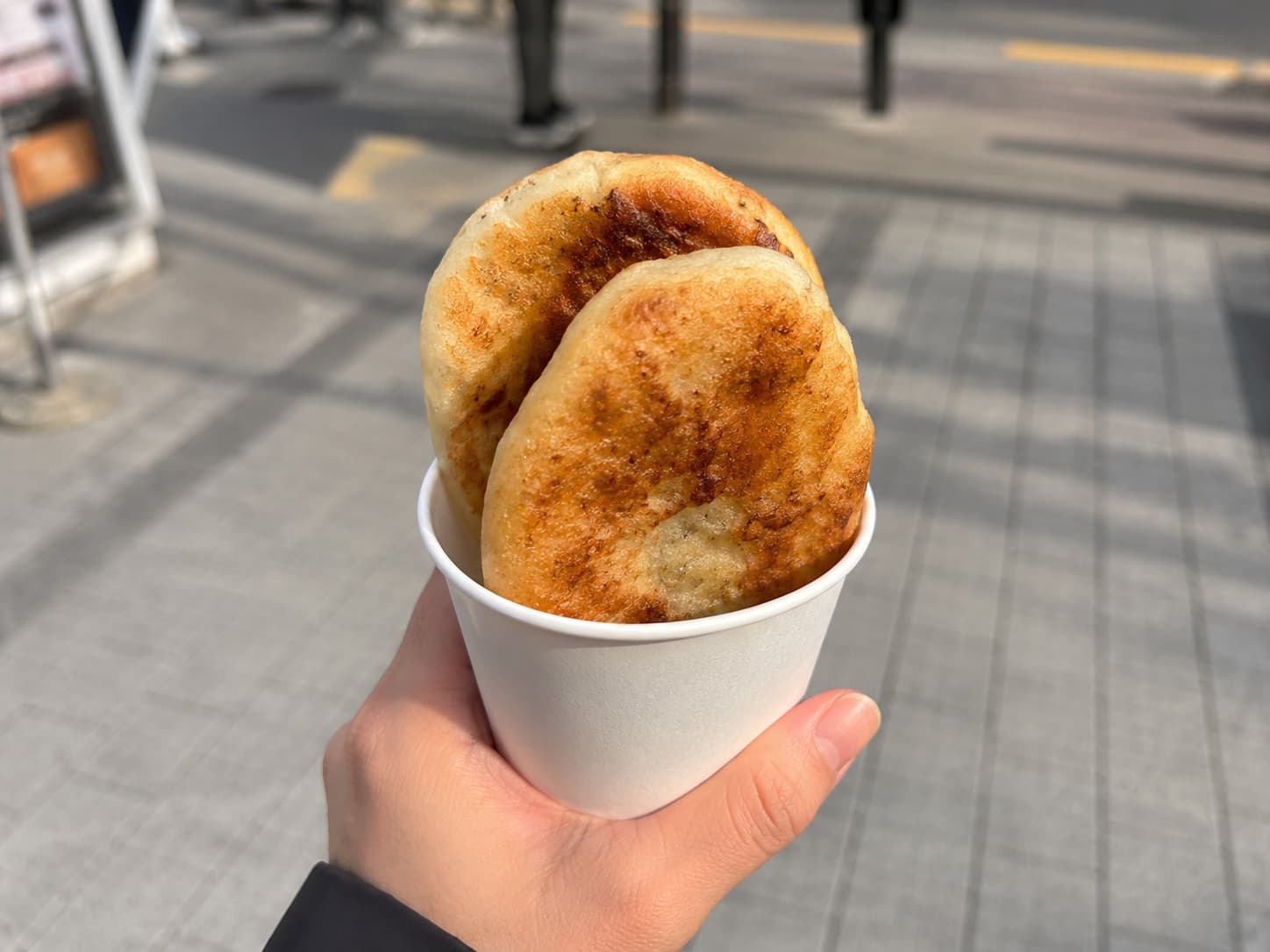
Hotteok, or 호떡, is a warm, pan-fried dough pancake with a filling pressed inside it. A vendor flattens a ball of soft dough on a hot griddle, usually with a flat metal press, so the outside turns golden and slightly crisp while the inside stays soft and warm. In the classic version, that inside is filled with melted brown sugar and cinnamon, sometimes with a few crushed peanuts mixed in, so the first bite releases a warm, syrupy center. Most stalls hand it to you in a small paper cup or wrapper, which is less about presentation and more about the fact that the filling gets seriously hot.
Hotteok has a strong association with fall and winter in Korea. As the weather cools down, street vendors with griddles start showing up outside subway exits, near markets, and along busy shopping streets, and the smell of hotteok cooking is one of the more familiar signs that colder weather has arrived. You can still find hotteok in some markets and shops during warmer months, but the mental image most people have — a steaming hotteok in a paper cup on a chilly evening — is very much tied to the cooler seasons.
The brown-sugar version is what most people picture first, but it is really just one recognizable style among a few. If you spend some time around Korean street food, you will likely come across these as well.
The original, and still the most common. Melted brown sugar and cinnamon fill the dough, and the syrup stays hot long after the outside has cooled down enough to hold. This is the version shown at the top of this page.
Seed hotteok mixes sunflower seeds, pumpkin seeds, and other nuts into the filling instead of relying only on syrup, so each bite has more crunch alongside the sweetness. It's a recognizable style you'll see at street stalls in a number of cities, and it's especially associated with market areas in Busan.
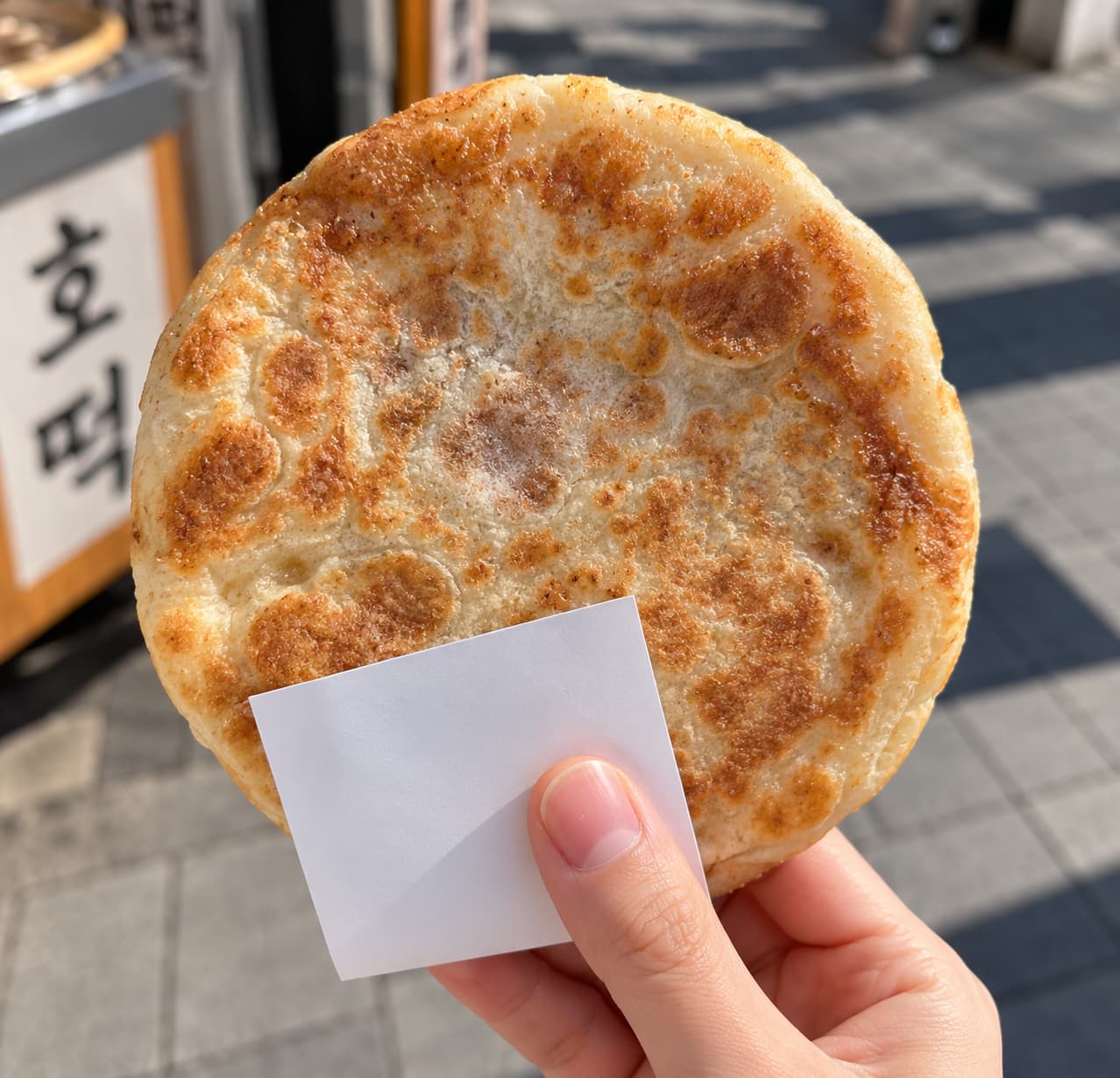
Gireum literally means "oil," and it's one of the names you'll sometimes see used for hotteok cooked this way. Exactly how much oil goes into the pan, and how thin or crisp the result turns out, tends to depend on the stall — hotteok-making style varies quite a bit from vendor to vendor, even for what looks like the same snack.
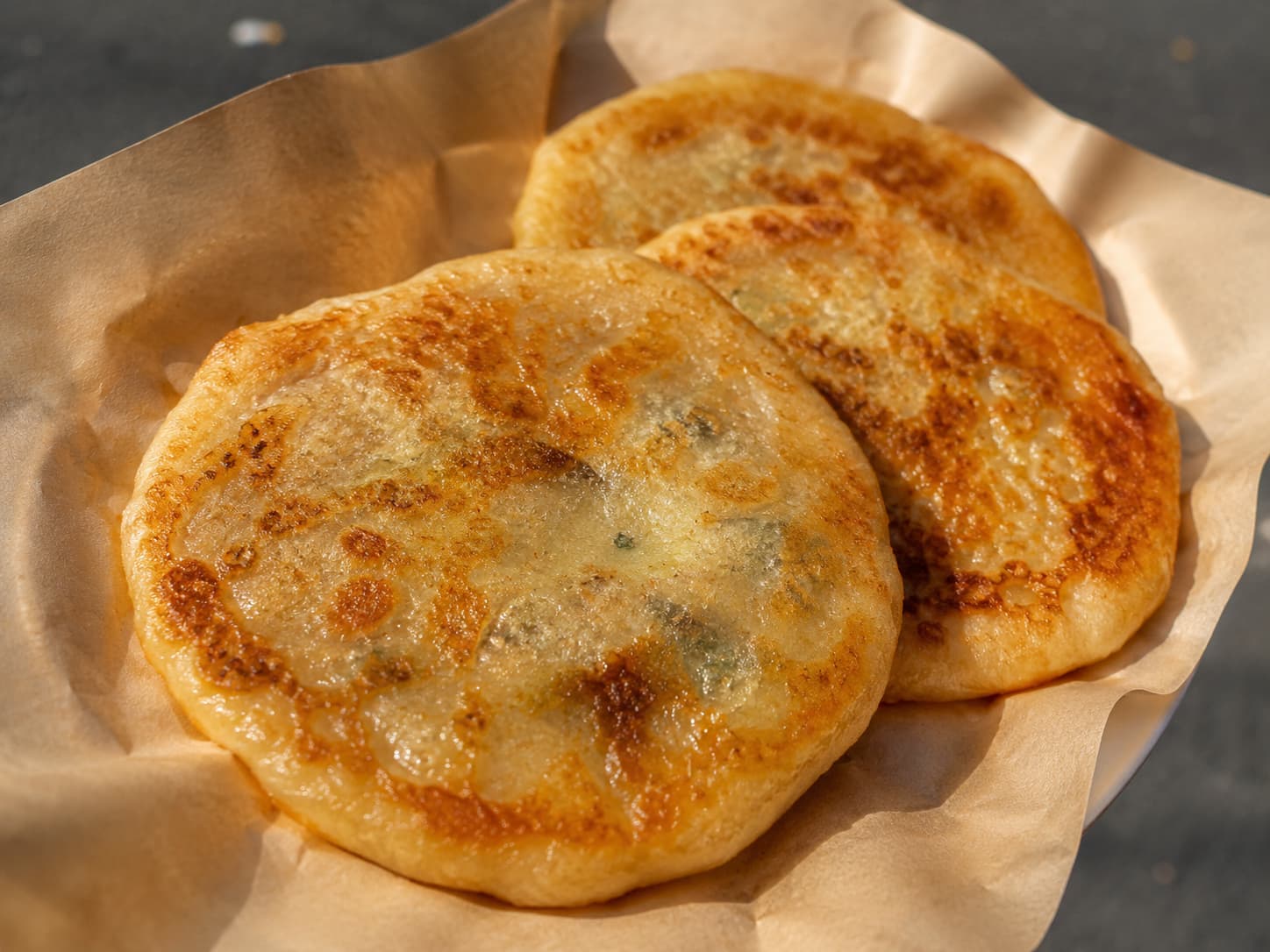
Not every hotteok is sweet. Vegetable hotteok swaps the sugar filling for shredded vegetables, sometimes mixed with glass noodles and a light savory sauce, so it eats more like a handheld savory pancake than a dessert. It shows up less often than the sweet versions, but it's a good option if you want something filling that isn't sugary.
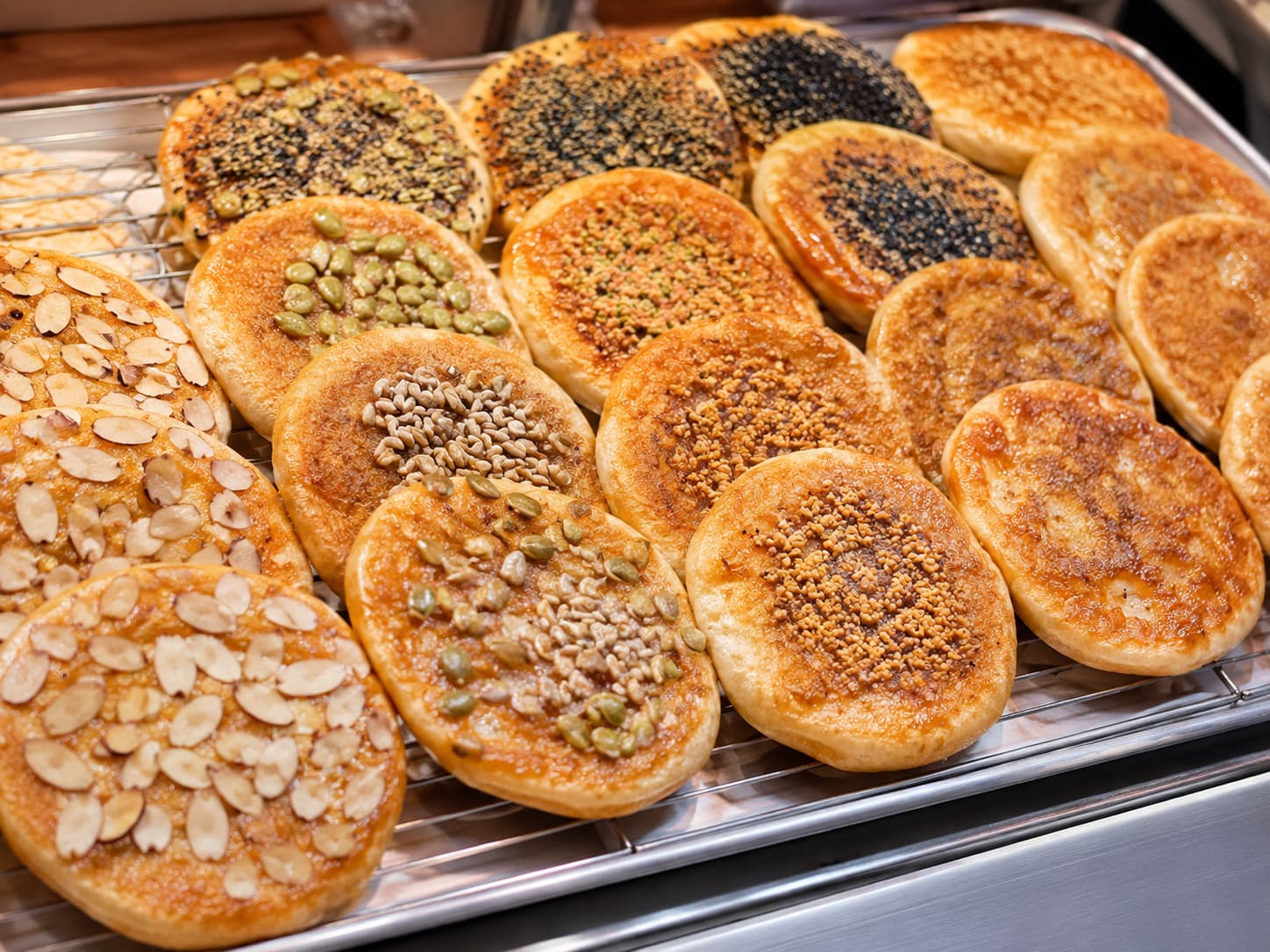
You may also come across hotteok finished with toppings pressed onto the outside — crushed nuts, seeds, sesame, or sliced almonds added after cooking. Compared with seed or gireum hotteok, which are established names people already recognize, this topped-on-top look feels like a newer variation, and it's not something every stall does. Where you do see it, the exact toppings vary a lot from vendor to vendor, so no two trays look quite the same.
A local note from HAEMIL
Lately, I've been noticing more hotteok with toppings pressed onto the outside — nuts, seeds, sesame, sliced almonds — more often than I used to. I can't say exactly when this started or how common it is everywhere, but it's the kind of small shift you start noticing.
Keep exploring
Food guide
Chewy rice cakes in red sauce — what tteokbokki is, where you find it, and the classic add-ons at bunsik shops.
Read guide →
Food guide
Fish-shaped winter street snacks — red bean bungeoppang and the cold-day stall mood that feels local, not staged.
Read guide →
Food guide
Korean fried snack-shop sides — gimmari, mandu, and dipping twigim back into tteokbokki sauce like locals do.
Read guide →
Food
Simple HAEMIL food guides for understanding what to eat in Korea and how to order without turning every meal into homework.
Read guide →