← Back to Travel

Travel guide

Luggage Storage in Seoul for First-Time Visitors: Lockers, Hotels, Stations, and Local Tips

If it is your first time visiting Seoul, luggage can affect your day more than you expect. On a map, stopping somewhere before hotel check-in may look easy. In real life, you may be carrying a suitcase through subway stairs, station exits, busy crossings, narrow alleys, hills, and crowded streets. The best local advice is simple: plan your luggage before you plan your sightseeing.

Quick answer

  • Easiest option: ask your hotel or stay if they can hold luggage
  • Useful option: station lockers, if available and your suitcase fits
  • Good for airport days: airport or major transport-area storage options, depending on your route
  • Main warning: do not drag luggage across Seoul during rush hour if you can avoid it
  • Subway tip: fewer transfers are better with suitcases
  • Local tip: plan luggage first, sightseeing second on arrival and departure days
  • Avoid: carrying large luggage to Bukchon, palaces, crowded markets, small cafes, or nightlife streets

Hotel or stay luggage storage

If your hotel or stay can hold your luggage, that is usually the easiest option.

Many travelers first ask their hotel, guesthouse, or accommodation whether they can leave bags before check-in or after check-out. Policies vary, so you should check with your own stay.

When it works, this is usually the smoothest choice.

You go straight to your stay.

Drop your bags.

Then start the day lighter.

This is especially helpful if you arrive in Seoul before check-in time.

Station lockers

Station lockers can also be useful.

You may find lockers in major stations, subway areas, malls, or transport hubs. They can help if you want to store a bag for a few hours while you walk around.

But lockers are not perfect.

They can be full.

They may be hard to find inside a large station.

The size may not fit a large suitcase.

Payment or language support may vary.

The locker may be far from the exit you actually need.

So do not build a tight plan around a locker unless you have some flexibility.

A locker is useful when it works.

It is stressful when you are tired and every locker is full.

Moving through large stations with luggage

Large stations can be confusing with luggage.

Seoul Station, Hongdae, Gangnam, Jamsil, Express Bus Terminal, and other big stations can involve long walks, stairs, escalators, crowds, and many exits.

If you have a suitcase, the shortest route on a map may not feel like the easiest route in real life.

With luggage, fewer transfers are usually better than the fastest-looking route.

A slightly longer route with elevators, simpler transfers, or fewer station changes can feel much better.

Rush hour and suitcases

Rush hour is the worst time to move with luggage.

During weekday morning and evening commute times, subway cars and station walkways can become very crowded. People are moving quickly to work, school, appointments, or home.

Dragging a large suitcase through that flow can feel stressful for you and inconvenient for everyone around you.

If you can, avoid moving across Seoul with luggage during rush hour.

Wait a little.

Have coffee.

Eat something simple.

Move when the crowd is lighter.

Taxis with luggage

Taxis can help, but they are not always the answer.

A taxi can be useful if you have heavy luggage, bad weather, family members, or a difficult subway route.

But during rush hour, rain, events, or heavy traffic, a taxi can be slow and expensive for the amount of distance you cover.

Sometimes the subway is crowded but still more predictable.

Sometimes the taxi is more comfortable.

Choose based on the day, not just the idea that taxi is always easier.

Where not to take large luggage

Avoid taking large luggage to delicate or crowded areas.

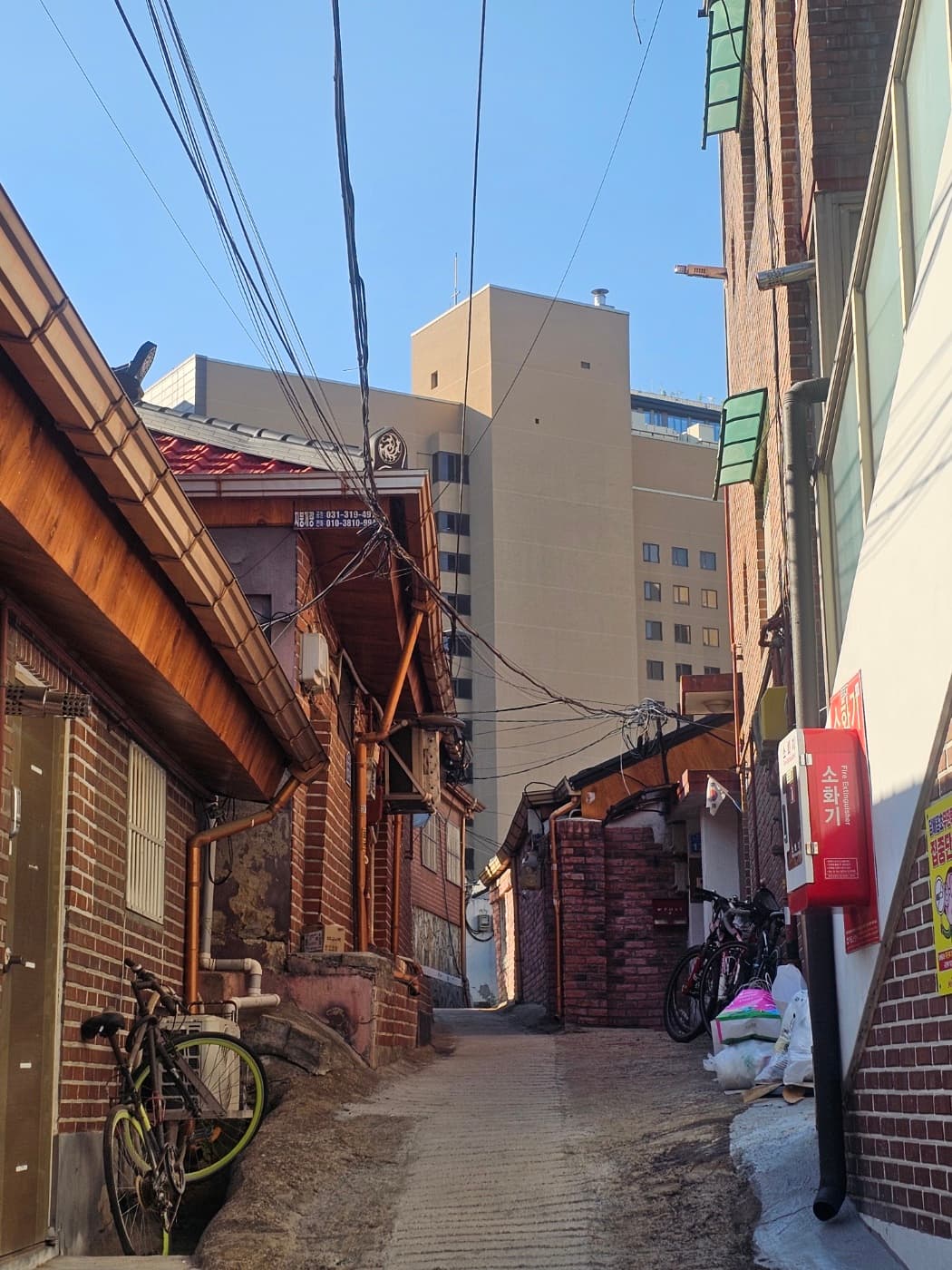
Bukchon, palace areas, Insadong alleys, Ikseon-dong, crowded markets, small cafes, and busy nightlife streets are not fun with a suitcase.

Some places have narrow paths.

Some have stairs.

Some are crowded.

Some are real residential areas.

Dragging luggage through those places can make the experience worse.

If you want to visit those areas, store your luggage first.

Cafes and restaurants are not storage

Cafes and restaurants are not luggage storage.

Some large cafes may have space near your table, but many smaller Seoul cafes are compact. Restaurants can be busy, narrow, or fast-paced.

Do not expect a cafe or restaurant to watch your suitcase while you leave.

If you sit down with luggage, keep it close and avoid blocking walkways.

Departure day

For departure day, keep the plan simple.

If your flight is later, ask your stay about luggage storage after check-out.

If that is not possible, consider a station or airport-area storage option depending on your route.

But do not plan a far, complicated sightseeing day with luggage before going to the airport.

Departure day already has enough stress.

You need to think about transport, timing, airport movement, and your bags.

One good plan is to stay near your final route.

If you leave from Seoul Station, spend time nearby or in central Seoul.

If you leave by airport bus, stay near the bus stop area.

If you are carrying big luggage, avoid plans that require many transfers.

Keep arrival and departure days lighter

Arrival day and departure day should be lighter than normal sightseeing days.

That does not mean boring.

It means realistic.

A convenience store meal, a nearby cafe, a short neighborhood walk, or one easy shopping street can be enough.

The goal is to enjoy the day without fighting your suitcase.

Final note

For HAEMIL readers, the easiest luggage rule in Seoul is this:

Bags first, sightseeing second.

Drop luggage at your stay if possible.

Use lockers when they are convenient, not as a risky last hope.

Avoid rush hour with suitcases.

Choose fewer transfers.

Do not drag large bags into crowded alleys.

And keep arrival and departure days simple.

Seoul is much more enjoyable when your hands are free.

Keep exploring

Related travel guides

See all Travel →

Travel guide

Korea arrival day checklist for first-time visitors

A practical first-day Korea guide covering airport arrival, internet setup, maps, transport, hotel check-in, first meal, Wi-Fi, and local travel tips.

Read guide →

Travel guide

How to get from Incheon Airport to Seoul

A local-friendly first guide to AREX trains, airport buses, taxis, Kakao T, late-night arrivals, luggage, and choosing the easiest route into Seoul.

Read guide →

Travel guide

How to get around Seoul for first-time visitors

A practical Seoul transport guide for first-time visitors, with subway, taxi, rush hour, airport routes, walking, maps, and local trade-offs.

Read guide →

Travel guide

Where to stay in Seoul for the first time

A practical local-style guide to choosing your Seoul base, from Myeongdong and Hongdae to Gangnam, Insadong, Seoul Station, and Jamsil.

Read guide →

Travel guide

Things to know before visiting Korea for the first time

A practical first-time Korea travel guide with local tips on Seoul transport, maps, rush hour, food ordering, costs, cafes, weather, and common travel mistakes.

Read guide →

Travel guide

3 days in Seoul itinerary for first-time visitors

A practical local-friendly Seoul route for first-time visitors, with Myeongdong, Namsan, palaces, Insadong, Hongdae or Gangnam, plus honest travel trade-offs.

Read guide →

Travel guide

Best Korea travel apps for first-time visitors

A practical guide to Korean apps travelers may actually use, from Naver Map, KakaoMap, Papago, Kakao T, and subway apps to Baemin, CatchTable, Yanolja, and Yeogi Eottae.

Read guide →